
Commercial Roofing in Lansing, KS
Where a roof covers patients, records or sensitive equipment, the replacement window needs to be set earlier than it would be for a storage building, and that is the planning logic we bring to Lansing, KS. Census QuickFacts reports 2022 health-care and social-assistance receipts of $39,718 thousand for Lansing, along with retail sales of $103,275 thousand, in a city with a 2025 estimate of 11,331 residents. Care-related and retail activity are both part of the local economy. Our Lansing work is low-slope and metal commercial roofing, from repair through replacement, and a visit begins with a written account of what the roof shows today.
Tell us which interiors are most sensitive
Send the roof plan, the spaces beneath it that matter most, leak history, your decision date and an access contact for the Lansing property. We will return a documented assessment that separates present repairs from capital planning assumptions.
Interiors that cannot tolerate a leak
Clinics, offices that hold paper records, and spaces with sensitive equipment all share a trait: the cost of a leak reaches well beyond the ceiling tile. Water can damage records and electronics, close an exam room, or force a tenant to relocate for days. For those uses, we recommend tightening the inspection interval and treating moisture detection as routine rather than a response to complaints.
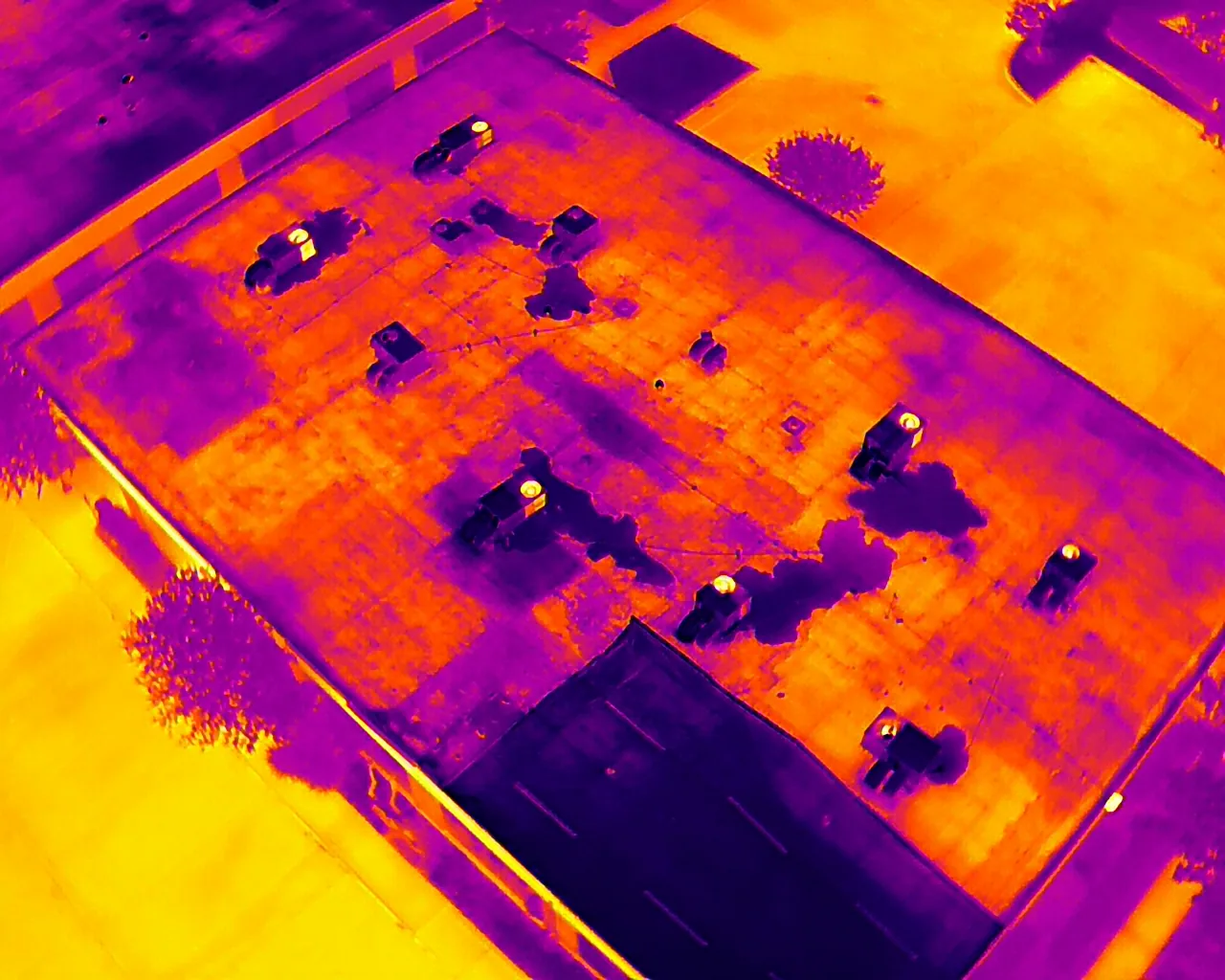
An infrared moisture survey can reveal wet insulation long before a stain shows, because trapped water holds heat differently from dry board as the roof cools after sunset. We confirm suspect areas with cores or a moisture meter, mark the wet boundary on the roof plan, and recommend localized replacement when the wet area is small. An owner who finds the problem at that stage controls the cost and the schedule, and a medical or office tenant is spared the surprise of an active leak.
Temperature movement adds to the risk. The Olathe airport normals run a range of 29.8°F to 78.8°F in monthly means, and a membrane that expands in summer and contracts through a freeze-thaw winter works its seams and terminations all year. We note where seams have lifted, where sealant has hardened, and where flashing has pulled from a wall, because those are the details that open first and let water in over a sensitive space.
Noise, dust and fumes during occupied roofing
Work above an occupied building raises practical questions that a roof plan alone does not answer. Tear-off is loud, and hot or solvent-based adhesives can send odors toward air intakes. Dust and debris can find their way down through penetrations. For care-related tenants, those effects matter more than for a warehouse, so we plan the work around them.
We locate air intakes and exhaust points before the first day and discuss where cold-applied or low-odor systems make sense. We schedule louder tasks in agreed windows, install interior protection below openings, and keep the work area closed to foot traffic. Our occupied building reroofing scope lists these measures so facility staff can see exactly what will be done and when. A medical office roofing job is often phased across several weeks for this reason.
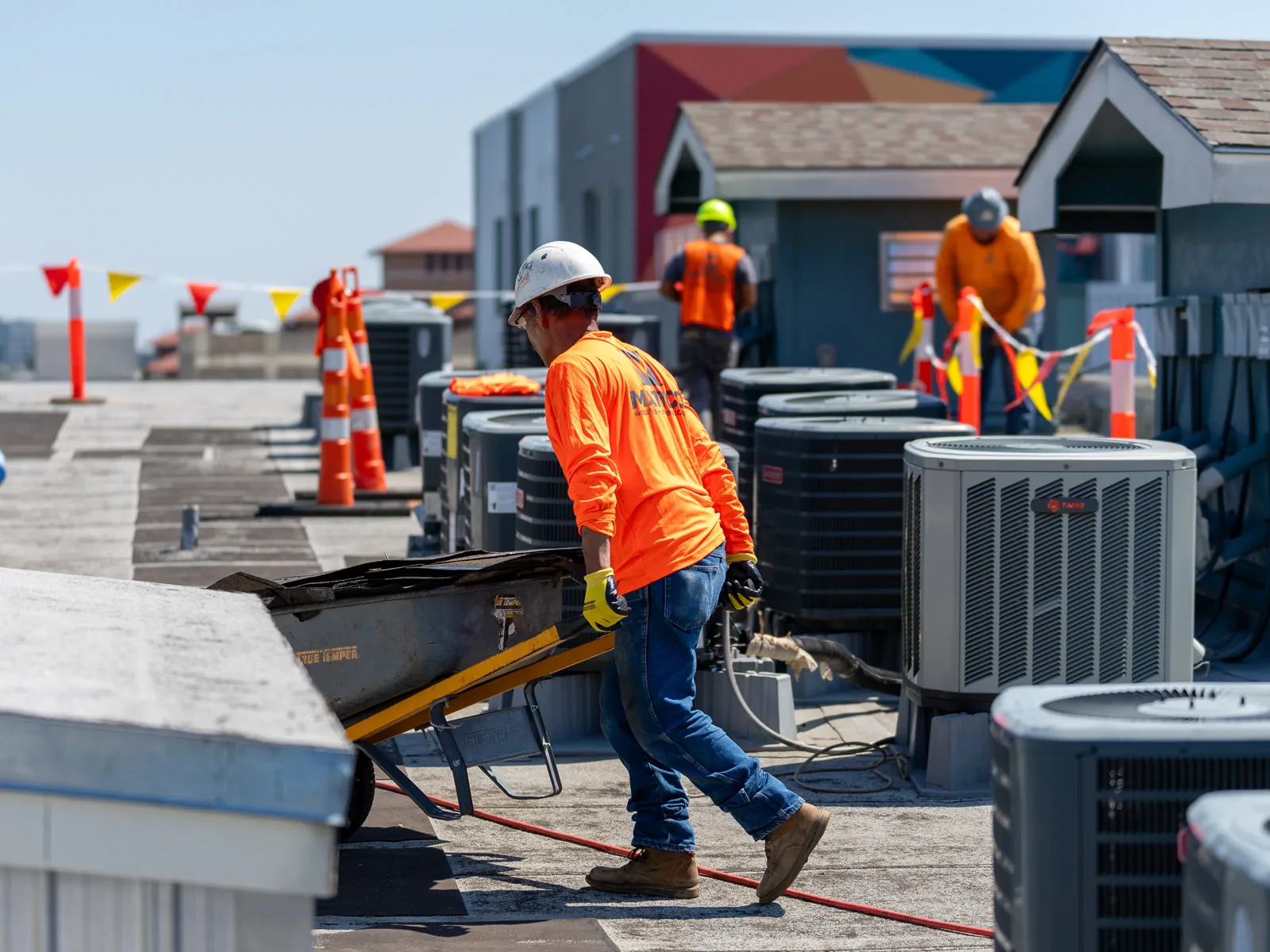
Rooftop equipment is the other variable. Healthcare and office buildings often carry air handlers, exhaust fans and condensers that must keep running during roof work, so we plan how to flash around them without shutting them down. Where a unit does need to be lifted, we coordinate with the facility's mechanical contractor and arrange a short, defined outage with the tenant's approval in advance.

Weighing repair against a full replacement
A roof with local defects and dry insulation can usually be repaired and kept on a short inspection interval. A roof that has been repaired repeatedly, that holds water, or that tests wet across a large area is a replacement candidate. Weather adds urgency, since the Olathe normals show 37.54 inches of yearly precipitation and 109.6 freezing-low days and a weak seam is tested often.
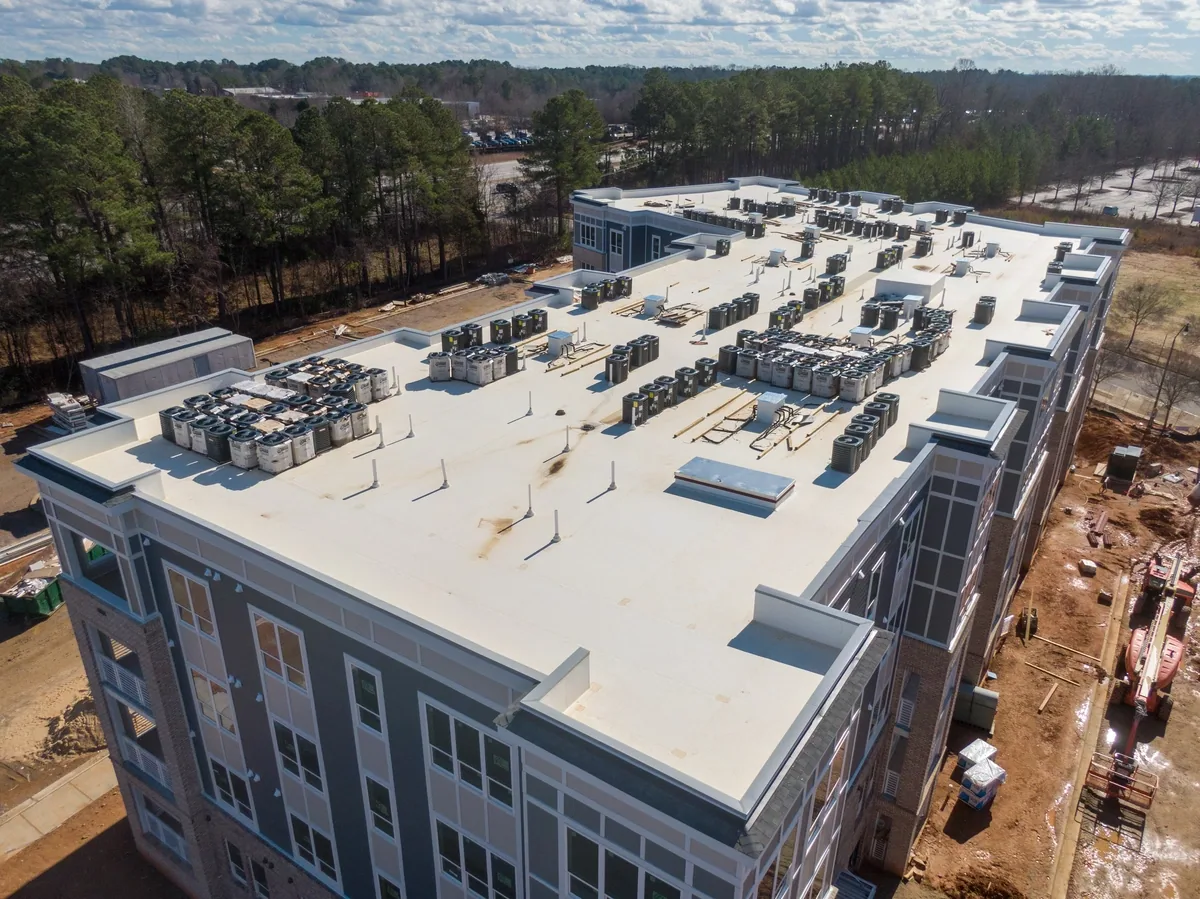
When replacement is chosen, the membrane type matters. Single-ply systems such as TPO are widely used on low-slope commercial buildings, and the choice among them, modified bitumen and built-up depends on traffic, equipment, drainage and the owner's holding period. We compare options on one bid basis: the membrane, insulation value, cover board, flashing, drains and cleanup, so the comparison stays clear and nothing is hidden in an allowance.
Timing matters as much as scope. A tear-off scheduled for the mild weeks of spring or autumn gives adhesives and sealants a dependable cure, while a winter repair is limited to temporary measures. We therefore advise owners with an aging roof to decide in the capital year before the roof fails, so replacement lands in a favorable season and not in the middle of a storm response.
Records that speed up a healthcare or office scope
Facility managers and property managers hold information that shortens the scoping conversation. Useful items include a roof plan, locations of air intakes and exhaust, a list of sensitive spaces beneath the roof, prior leak reports with dates, warranty papers and the contact who can approve access. If the building follows internal infection-control or safety procedures for construction, we need those rules before we price.
With those records the scope version can address each constraint by name, and a roof condition report can rank the findings by consequence as well as by severity. A small defect above a records room can rank higher than a larger defect above an empty corridor, and the report says why.
More About Commercial Roofing in Lansing, KS
Storm triggers and after-hours response
A Weather Service survey followed the May 19, 2024 wind damage from Gardner into Olathe, peaking near 80 mph. Lansing is not named, so the survey applies only to a property an owner has reason to place in that path. Kansas City-area thunderstorm climatology includes hail, and we judge any building on what is visible after an event, including displaced edge metal, torn flashing and bruised membrane.
If a roof opens in the night or on a holiday, emergency roof repair is available at all hours. The first visit protects the interior and documents the opening, while the permanent repair waits for weather and materials. An owner with other properties can add Lansing to a register that includes Olathe and Overland Park.
Commercial Roofing Questions
How tight should the inspection interval be for a clinic roof?
Shorter than for a building with low consequence, with one visit before winter, one after spring storms, and a walk after any significant event. The exact schedule follows the roof's condition, and a moisture survey every few years adds a check on what the surface cannot show.
Can roofing proceed above an occupied medical space?
It can, with planning. We locate air intakes, schedule noisy tasks in agreed windows, protect interiors and keep the work area separate from patients and staff. The scope version sets out each measure before work begins.
What does infrared moisture detection actually show?
It shows temperature differences across the roof surface as it cools, which often indicate wet insulation beneath the membrane. We verify suspect zones with cores or meters, then map the wet area so a repair or replacement can be sized to the problem.
Which matters more for a records room, the size or the location of a defect?
Location. A small opening above sensitive contents can cost more than a larger one above an empty space. Our reports rank findings by consequence for this reason.
What should I send before a first walk?
A roof plan, leak history, air intake and exhaust locations, any internal construction rules, warranty documents and an access contact. With those we can price and schedule the work more precisely.
Tell us which interiors are most sensitive
Send the roof plan, the spaces beneath it that matter most, leak history, your decision date and an access contact for the Lansing property. We will return a documented assessment that separates present repairs from capital planning assumptions.
