Soprema Roofing Systems in Olathe, KS
Granule loss on a cap sheet is the first line item in the field condition report for a Soprema roof, and it is worth watching on a schedule that follows the sun and the freeze. The airport normals for Olathe, KS give an 89.4°F average July high and 109.6 freezing days a year, so modified bitumen on a south-facing slope takes ultraviolet load all summer and thermal shock all winter. Soprema is a maker of modified bitumen sheet, liquid-applied waterproofing and flashing resins, insulation, and other low-slope components. An owner may find the name on a two-ply bitumen roof, on a resin-detailed penetration, or on both in the same assembly.
We begin by confirming which, then compare the field condition with the replacement window in the register.
Start with the cap sheet
Send the property list, roof-area register, prior repair records, warranty papers and an access contact. We inspect the cap and base sheets, note how they were applied and what shape they are in, and write a scope that parts current repairs from capital planning assumptions.
How a two-ply modified bitumen roof ages
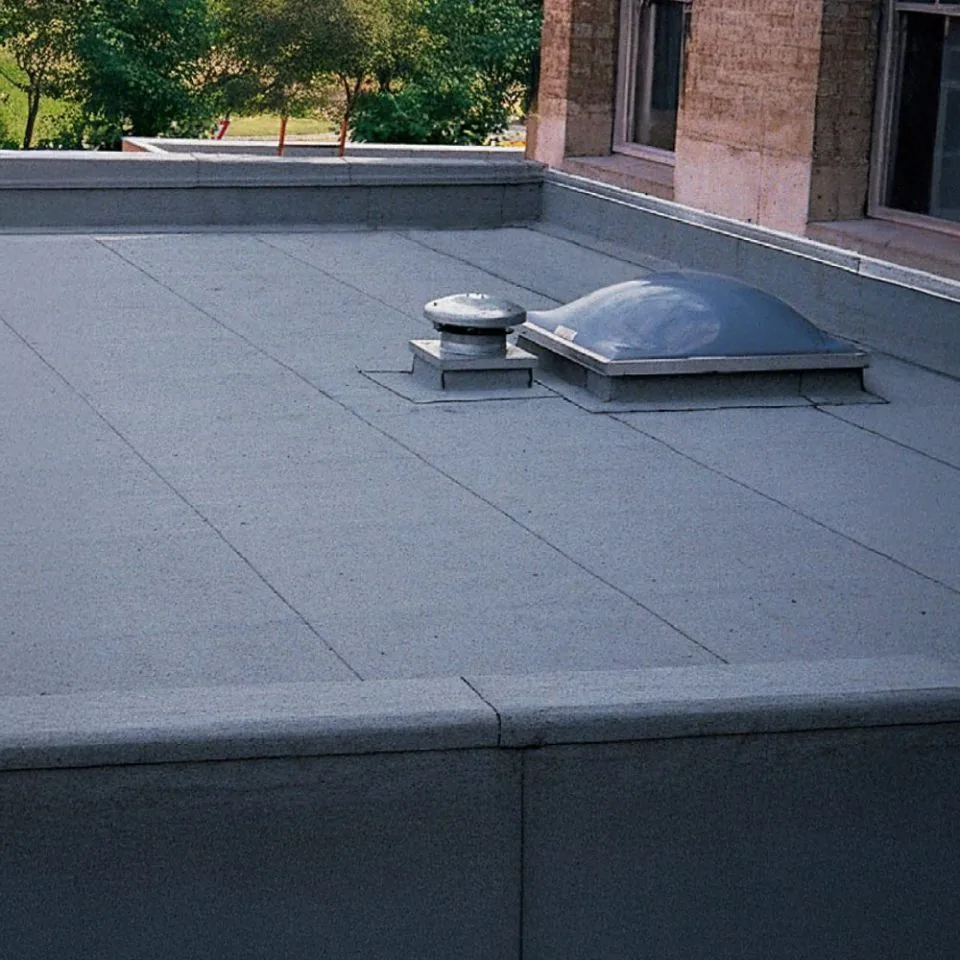
Reinforced asphalt sheet is laid in two plies, with a base sheet below and a granule-surfaced cap above. The cap carries the weather. Over years, granules wear off at drains, traffic paths and laps, exposing the asphalt to sunlight and speeding its breakdown. Laps may open where adhesive or heat-fusion was marginal, and the sheet can split along a line over a deck joint when movement exceeds what the reinforcement can handle.
We look for exposed reinforcement, alligatoring on the surface, open laps and blisters. Each defect gets a photograph and a map location. The modified bitumen roofing record on a building should show whether defects are spreading or isolated, because that trend drives the renewal trigger more than the age of the sheet does.
Torch, cold adhesive and self-adhered attachment
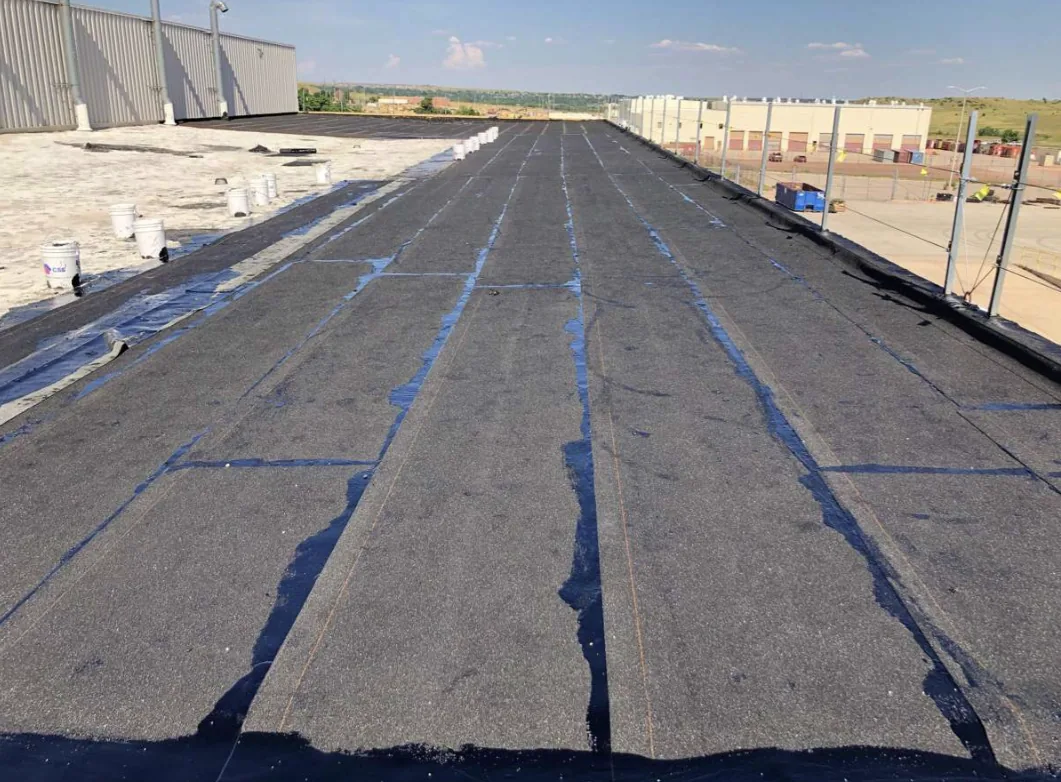
Modified bitumen can be installed by torching the underside, by mopping hot asphalt, by cold adhesive, or with a self-adhered sheet. The method matters for two reasons. It affects how laps and details will be repaired, and it affects whether open flame is acceptable at a given building. Many occupied buildings, especially those with combustible decks, insulation or sensitive operations, call for cold-applied or self-adhered work.
We read the method from the lap profile and surface and record it in the roof-area register. When a repair is needed, we match the method to the existing roof and the building's fire-safety conditions, and we hold a fire watch after any heat work. That discipline is part of reroofing an occupied building and is spelled out in the work plan before the crew arrives.
Liquid-applied membranes at the awkward details
A liquid-applied waterproofing resin can encapsulate a cluster of pipes, a dented curb, a drain flange or a worn flashing where a cut sheet will not lie flat. The resin bonds to the substrate and cures into a continuous layer, usually with embedded fabric at joints. It can also restore a roof area in place of tear-off when the substrate is sound and dry. Preparation decides the result: cleaning, priming, moisture testing, and weather cooperation during cure.
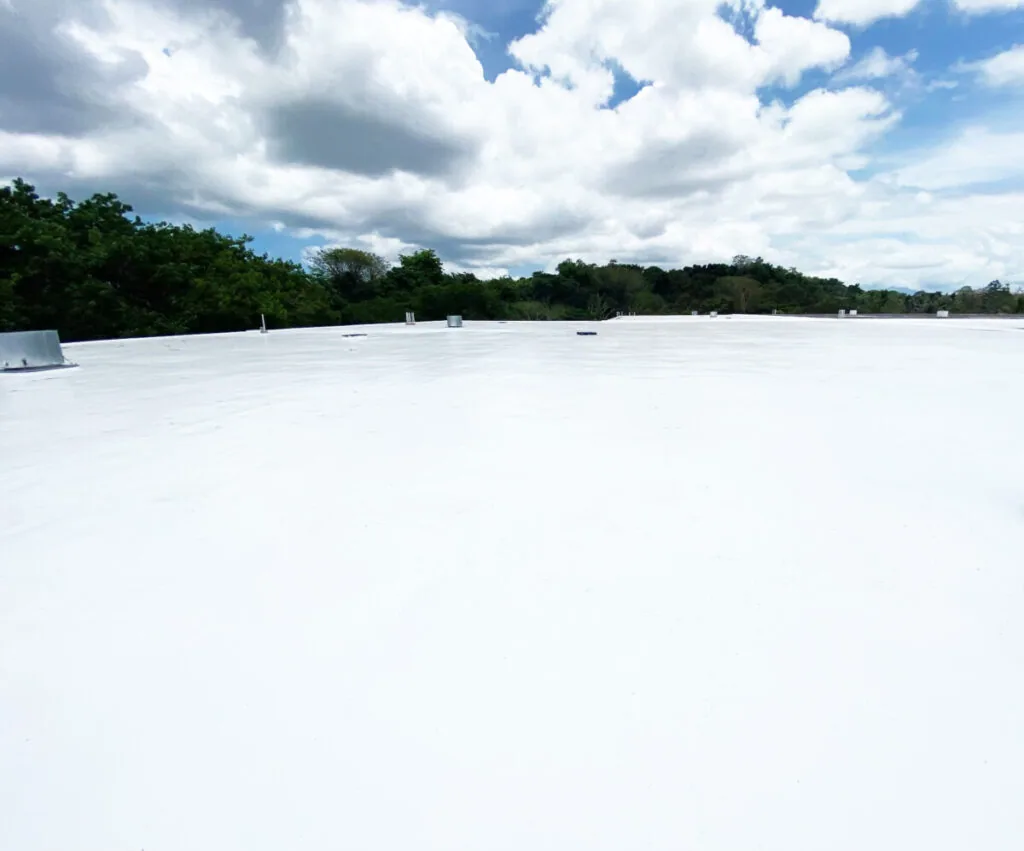
We schedule resin work around the forecast, because rain before cure can ruin a coat, and we record the product, thickness and cure conditions. Where a roof is a candidate for a silicone coating or other fluid-applied system, a compatibility test on a small patch comes first.
Hail bruising and the May 2024 wind line
Kansas City-area severe thunderstorm climatology includes hail. What matters on a given roof is observed condition: fractured granules, bruised reinforcement, broken laps and dented edge metal. Cap sheets are tough but not immune, and hail that cracks the surface can start a leak path that shows up only after a thaw.
Weather-service surveyors also mapped straight-line wind damage on May 19, 2024, between Gardner and Olathe at an estimated 80 mph, with brief tornadoes in other parts of Johnson County. After storms like this we walk the perimeter, check flashings and cap-sheet edges, and write findings by date. Owners considering a claim can pair those findings with insurance claim documentation that stays tied to observed damage.
More About Soprema Roofing Systems in Olathe, KS
Insulation board, code edition and the bid basis
A bitumen roof sits on insulation that determines its thermal value and its fire and uplift performance. Olathe's code notice names the 2018 building, existing-building and energy conservation codes, effective September 1, 2019, and the edition and amendments for a given project should be confirmed. Board thickness, cover board use and attachment follow from that confirmation, so we pin it down before bids go out.
For owners who hold several buildings, a uniform bid basis keeps proposals comparable. A Johns Manville or GAF alternate, for example, should specify the same insulation and attachment as the base bid, or the price difference is not a real comparison.
Drains, foot paths and rooftop equipment
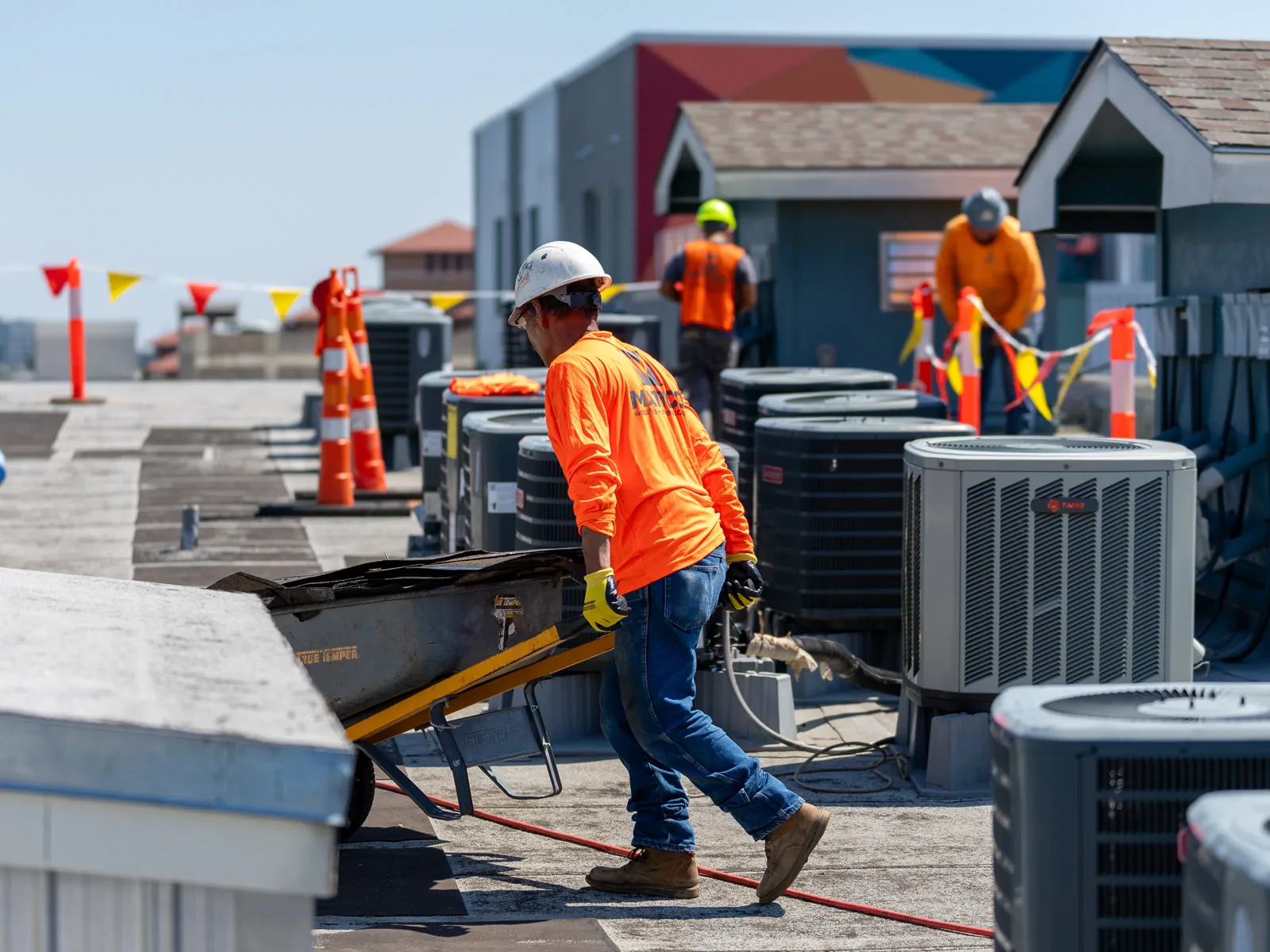
Cap sheets wear fastest where people and water concentrate. Technicians servicing rooftop units walk the same lines every visit, and without walk pads those lines turn into bare asphalt. Drains collect runoff and sediment, and a clogged drain bowl lets water stand against the sheet for days. We mark these zones on the roof-area register, check that pads sit under traffic routes, and clear debris so the drainage record reflects the roof and not a blockage.
Equipment curbs bring their own risk. A curb flashing that has opened at a corner can look like a membrane failure from inside the building. Following the water up from the ceiling to the curb is how we separate the two, and it keeps a repair budget from chasing the wrong cause.
Sequencing bitumen roofs across Johnson County buildings
The city's plan points to large industrial developments in the south, and K-10 carries a mix of uses between De Soto, Lenexa and Olathe, from industrial to education. Owners with buildings along that route can place their bitumen roofs on one schedule, ranked by cap-sheet condition, drainage and moisture findings. Where the schedule crosses from Olathe into Lenexa, each roof carries its own inspection interval, so the schedule shows which buildings are due for a visit this season and which can wait.
Commercial Roofing Questions
When does granule loss become a replacement signal?
When exposed asphalt or reinforcement appears across a growing share of the roof, and especially when it is paired with open laps or moisture in the insulation. Granule loss limited to drains and foot paths is a maintenance item. Spread across the field, it signals that the cap is reaching the end of its protection.
Which attachment method suits an occupied building?
Cold-applied and self-adhered methods avoid open flame, so they are often preferred where the deck or insulation is combustible or where the operations below are sensitive. Torch work can be acceptable with controls and a fire watch. The choice is made from the building's conditions and the owner's rules.
How does a blister differ from a bubble caused by trapped moisture?
Blisters in bitumen are usually trapped air or moisture between plies. If intact and small, they may be monitored. If they are broken open, or clustered, water has likely reached the felts or insulation. We cut one open only when a repair will follow.
What does a post-hail inspection record?
Locations of impact, whether granules or reinforcement are fractured, the condition of edge metal and rooftop equipment, and whether insulation core samples show damage. The record ties each finding to a roof area and date so the damage can be separated from earlier wear.
Can a liquid-applied system replace tear-off on a bitumen roof?
Possibly, if the roof is dry, the substrate is sound and adhesion tests pass. Wet insulation or widespread blistering rules it out. We run a moisture survey and a small test coat before pricing, since a coating over trapped water fails early.

Start with the cap sheet
Send the property list, roof-area register, prior repair records, warranty papers and an access contact. We inspect the cap and base sheets, note how they were applied and what shape they are in, and write a scope that parts current repairs from capital planning assumptions.