GAF Commercial Roofing Systems in Olathe, KS
A replacement window for a GAF-membraned roof is usually set by the capital year, but the roof decides how much of that window is real. In Olathe, KS, winter averages near 30°F and summer averages near 79°F frame the year, and the airport counts roughly 110 freezing days. Every one of those freeze days asks a seam, a flashing termination or an insulation joint to move and settle again. We read a GAF commercial roof the same way we read any other: by area, by assembly, by what the field condition shows today against what the roof-area register says it should show.
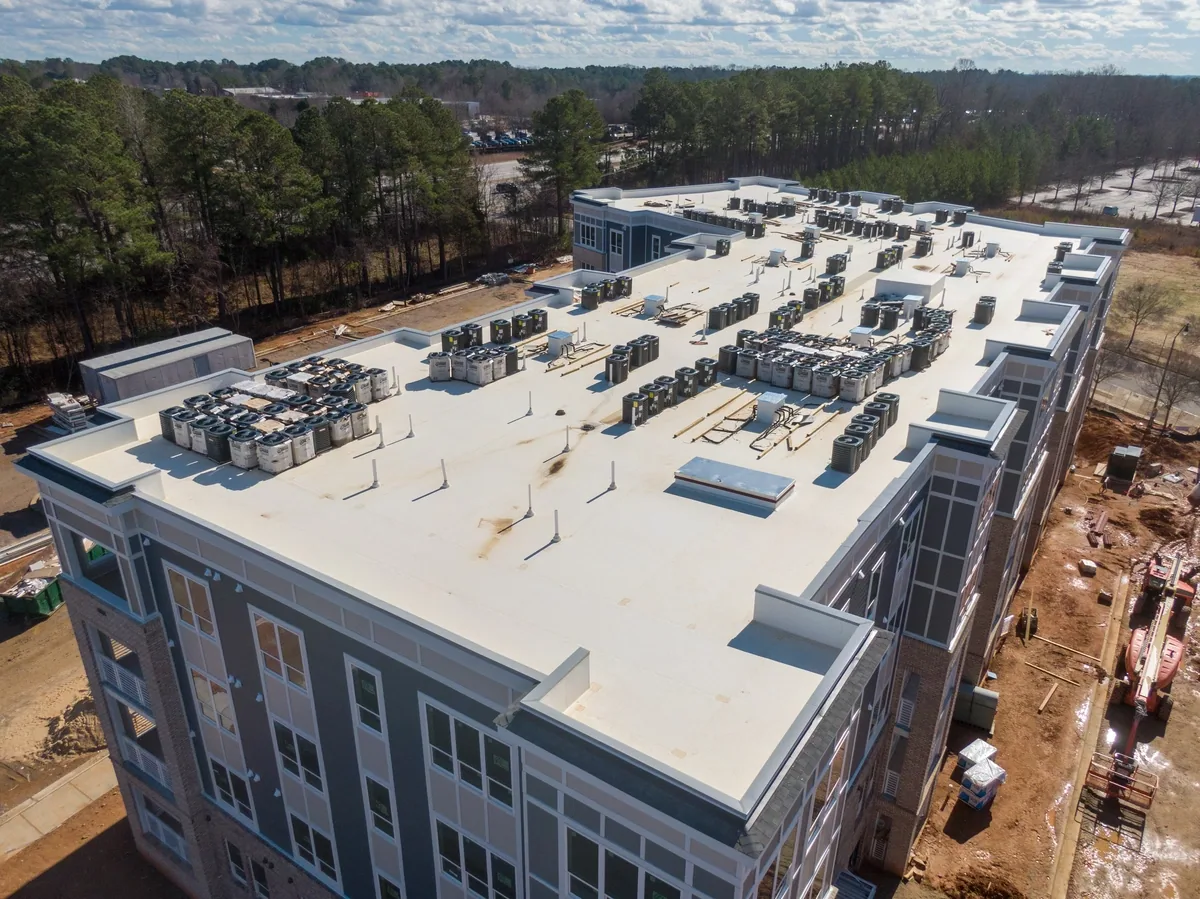
GAF sells low-slope commercial systems in the single-ply and modified bitumen categories, along with insulation boards, cover boards and accessories that sit under or beside the membrane. Owners meet the brand through a roof that carries it, a bid that specifies it, or a warranty file. We approach each case with the tenants and operations still in the building.
Put the roof and the warranty file side by side
Bring the property list, roof-area register, decision date, warranty documents and an access contact. Our walk names the system family and field condition, and the written assessment keeps today's repairs apart from capital planning figures.
What the manufacturer builds for low-slope roofs
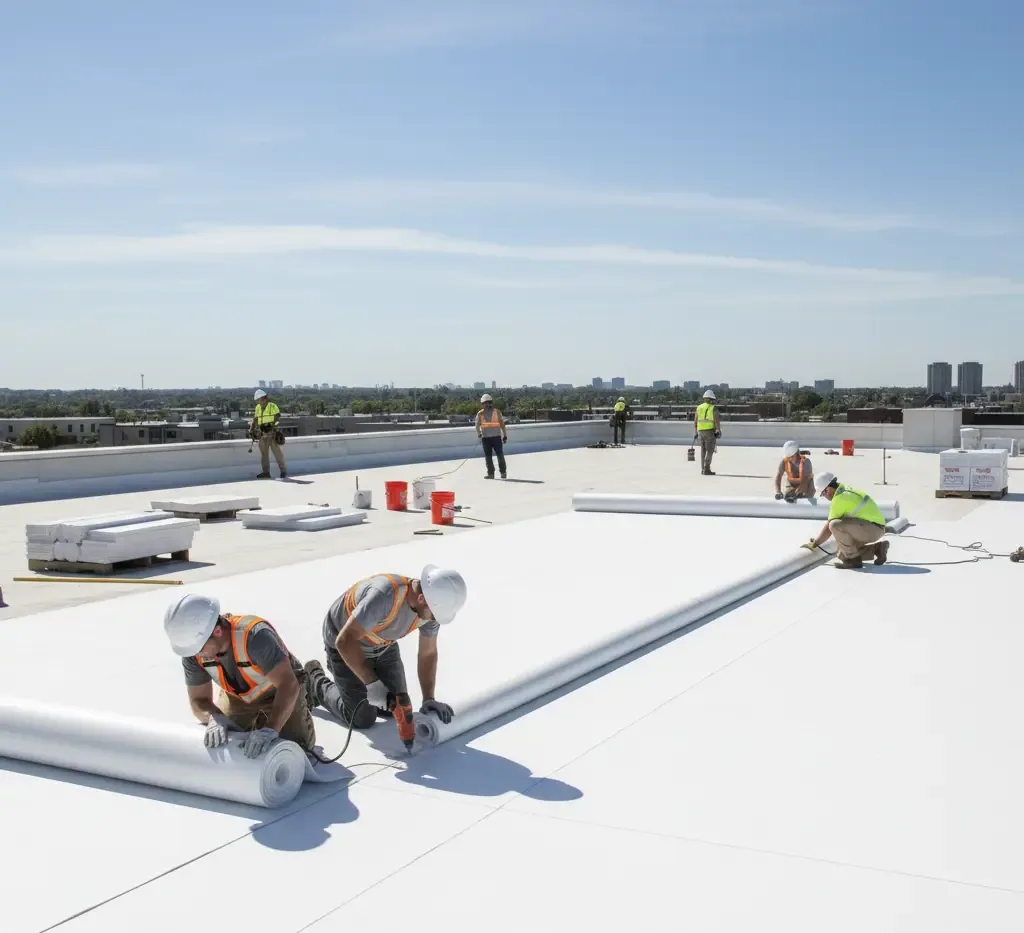
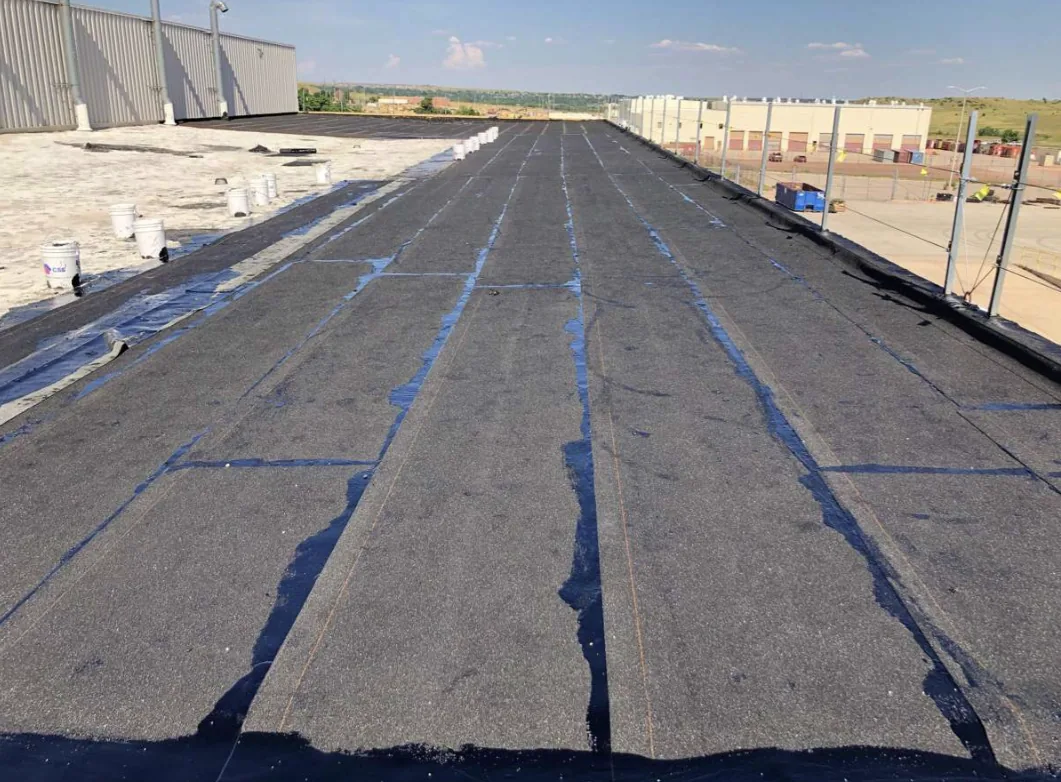
On a flat or low-slope commercial roof, GAF's range falls into a few broad families. One is thermoplastic single-ply, where factory-made sheets are joined in the field with hot-air welds. Another is modified bitumen, where reinforced asphalt sheets are torch-applied, mopped or set with cold adhesive. The rest is the supporting cast of insulation, cover boards, fasteners and edge metal that turn a sheet into a system.
Knowing which family you own changes every field decision. A heat-welded sheet can often be repaired by welding new material to cleaned old material, while a mod-bit roof may need a granulated cap sheet lapped and sealed in a particular order. We confirm the family on the first walk by reading seam geometry and surface texture. Our work on TPO roofs and on modified bitumen roofs covers the two families an owner is most likely to meet under this brand.
Freeze-day exposure and a heat-welded or torched seam
The seam is where a climate record turns into a roof record. Olathe's 37.54 inches of annual precipitation, spread over a year that swings between roughly 39°F average highs in January and 89°F in July, puts a membrane through repeated expansion and contraction. A seam that was contaminated at install or squeezed by a hard-set fastener row will show it first at the end of a long cold spell.
We look at those lines with a probe and a camera, not a guess. The reading is written against the drainage record: a seam that sits in a low area with standing water ages differently from one on a crown. For owners holding several buildings, the same reading across roof areas shows where defects recur and where they do not, which is the evidence a reserve plan needs before it commits money to a replacement.
The May 2024 wind line as an inspection trigger
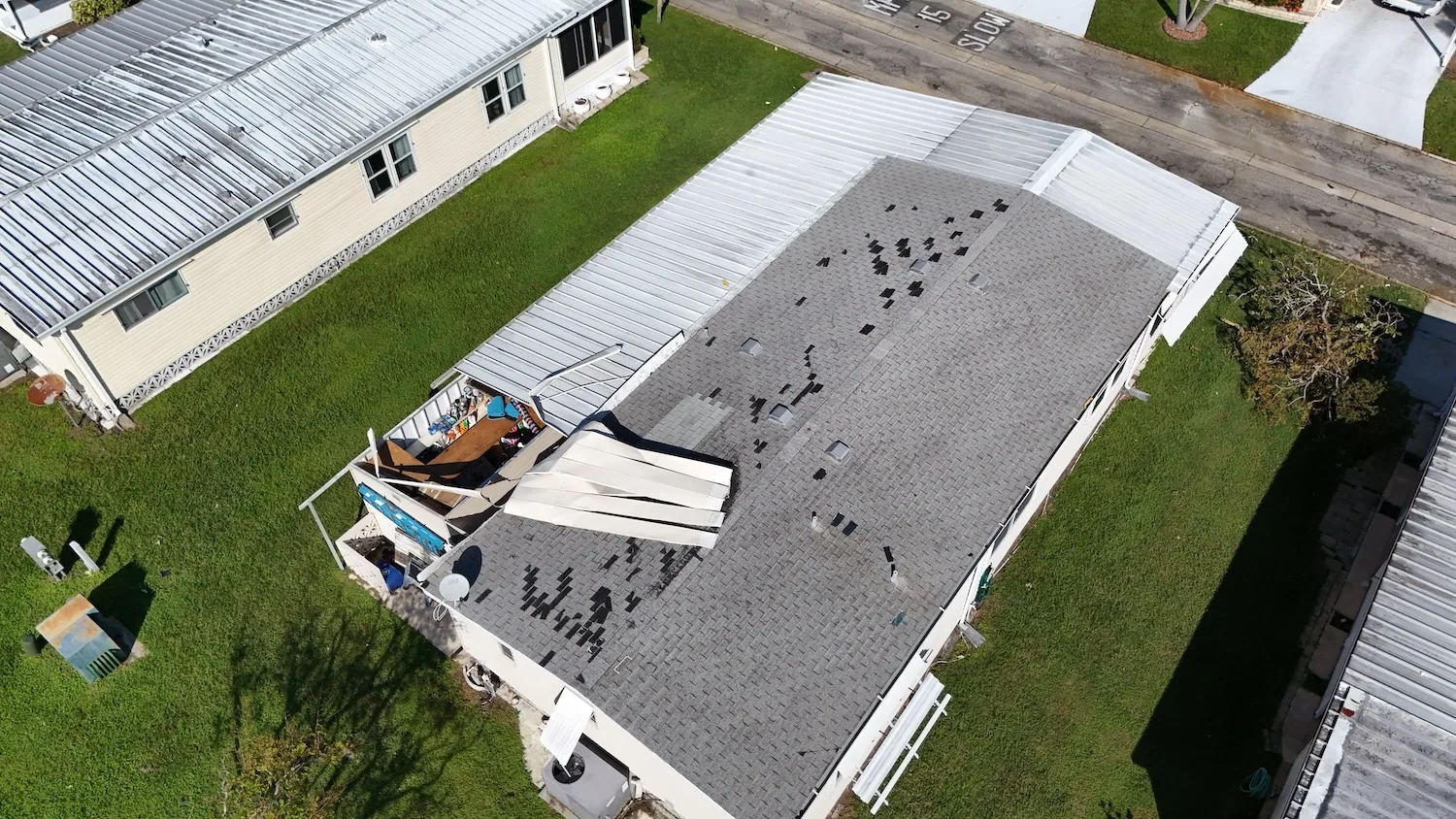
Surveyors for the National Weather Service traced straight-line wind damage from Gardner into Olathe on May 19, 2024, estimating a peak near 80 mph; the same line spun up brief tornadoes in other parts of Johnson County. That makes the date a reason to look. On a membrane roof the questions are specific: has the edge metal lifted, are perimeter fasteners backing out, is the sheet fluttering where it should lie flat, and did debris scar the surface.
Findings go into a written scope separate from ordinary wear. Our wind damage repair work starts with securing loose edges and then documents the rest, so storm damage is not mixed with older deferred maintenance.
Warranty files and the papers a roof needs
A manufacturer warranty is a contract with conditions, and the conditions often include who may repair the roof, which materials may touch it, and when a leak must be reported. Owners with an active warranty should gather the original document, the installer's closeout papers and any notice requirements before a repair is scheduled. We then plan the repair so that it follows the written conditions, and we photograph the work so the file shows what was done and why.
This is where warranty management earns its place in a reserve plan. Coverage running, expired or never issued each call for a different choice about patching, coating or replacing.
More About GAF Commercial Roofing Systems in Olathe, KS
Repair practice on a GAF-type roof
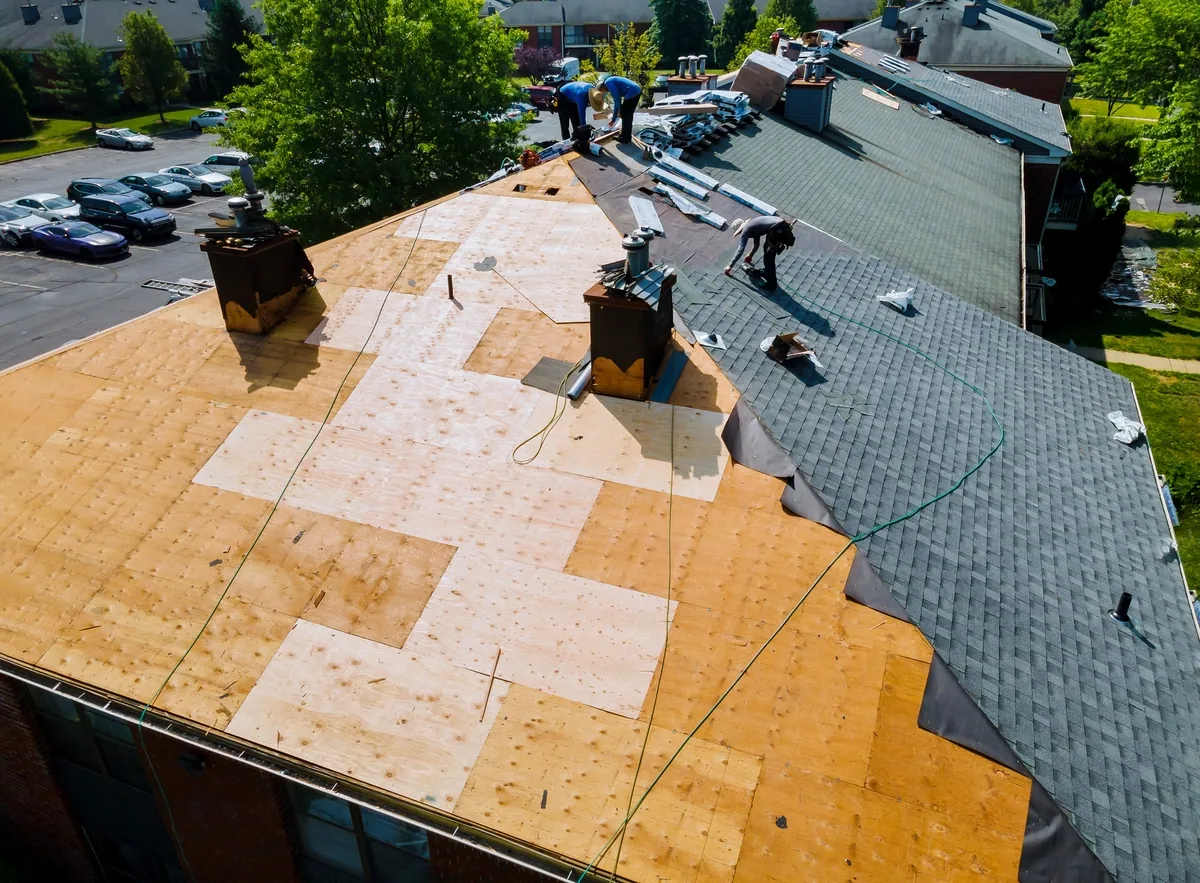
Repairs on single-ply and modified bitumen share a rule: the new work is only as good as the surface it bonds to. Dirt, oxidation, moisture and aged sealant stop a patch from taking hold, so preparation is most of the labor. On thermoplastic sheet we clean and weld, then probe the weld edge. On mod-bit we cut out the failed area, dry the substrate and lap new sheet into sound material.
Flashings get the same care. A termination bar that has lost its sealant or a curb corner that has split is a likely water path, and we treat it that way. When a pattern of failures points past a patch, we say so and move the conversation to a recover option or to replacement, with the field evidence attached.
Sequencing a brand-specific roof in a portfolio
An owner of industrial and commercial property in southern Olathe, where the city's economic plan describes large industrial developments, may hold roofs of several ages and several makers. A portfolio sequence should list each roof area, its system family, its last documented condition and its renewal trigger.
The goal is a ranked list, not a verdict. Some areas stay on an inspection interval and a few move to replacement in a named capital year. Properties in Lenexa and De Soto along the K-10 corridor can be folded into the same sequence, and a single schedule can hold Olathe and its neighbors together for an owner with buildings across the county.
Information that starts the review
Send the property list, the roof-area register, any warranty file, prior repair invoices and an access contact. We inspect the roof, record the system family and field condition, and return a written scope that separates repair items from capital assumptions. The same record supports a comparison with Carlisle SynTec or Johns Manville alternates when a bid asks for them.
Commercial Roofing Questions
Which condition decides whether a GAF roof gets repaired or replaced?
Recurrence decides it more than age. When the same seam, flashing or drain area fails again after a documented repair, the field record shows the material around it is no longer holding. Moisture readings under the membrane, brittle sheet at laps and repeated patch lines in one zone point toward replacement. A roof with scattered, unrelated defects and dry insulation usually stays on a repair and inspection interval.
How does the 2018 building code edition affect a re-roof?
The city's code-transition notice puts the 2018 building, existing-building and energy codes into effect on September 1, 2019, and the edition and any local amendments should be confirmed per project. Insulation thickness, attachment and wind uplift ratings feed the bid basis, so we ask for that confirmation before a scope version is priced.
Can a roof with an active warranty still be repaired by another roofer?
The warranty text controls that answer. Some documents restrict repairs to named installers, others only require notice and approved materials. Pull the document before authorizing work, and we will follow what it allows and photograph each step.
What do freeze days change about a seam repair?
They set the timing. Adhesives and welds need dry surfaces and temperatures in a workable range, so a repair planned for the cold months may be a temporary dry-in with the permanent correction held for milder weather. With about 110 freezing days a year recorded at the Olathe airport station, the schedule matters, and we write that split into the scope instead of treating a winter patch as the final repair.
Does a wind event like the May 2024 line require a full survey?
It requires a targeted one. Edge metal, perimeter attachment, rooftop equipment curbs and any loose debris marks tell us quickly whether more work is warranted. Roofs along the reported path from Gardner into Olathe go first on the list, and a clean result is recorded as carefully as a damaged one.
Put the roof and the warranty file side by side
Bring the property list, roof-area register, decision date, warranty documents and an access contact. Our walk names the system family and field condition, and the written assessment keeps today's repairs apart from capital planning figures.