Holcim Elevate Roofing Systems in Olathe, KS
The renewal trigger for a Holcim Elevate roof, long sold under the name Firestone Building Products, is a pattern in the record more often than a birthday. Olathe, KS gives that pattern a lot to build on: a January mean near 30°F, a July mean near 79°F, and 109.6 freezing days a year at the airport station. A membrane, a flashing and a drain each answer to those swings differently, so the register needs a line for each. The company's range covers rubber and thermoplastic single-ply, polyisocyanurate insulation, metal edge and wall products, and roof coatings, which means an owner may hold one name across several layers of a single assembly.
We start from the roof as found, confirm which of those materials are present, and write the scope around the evidence.
Bring the paperwork and the roof together
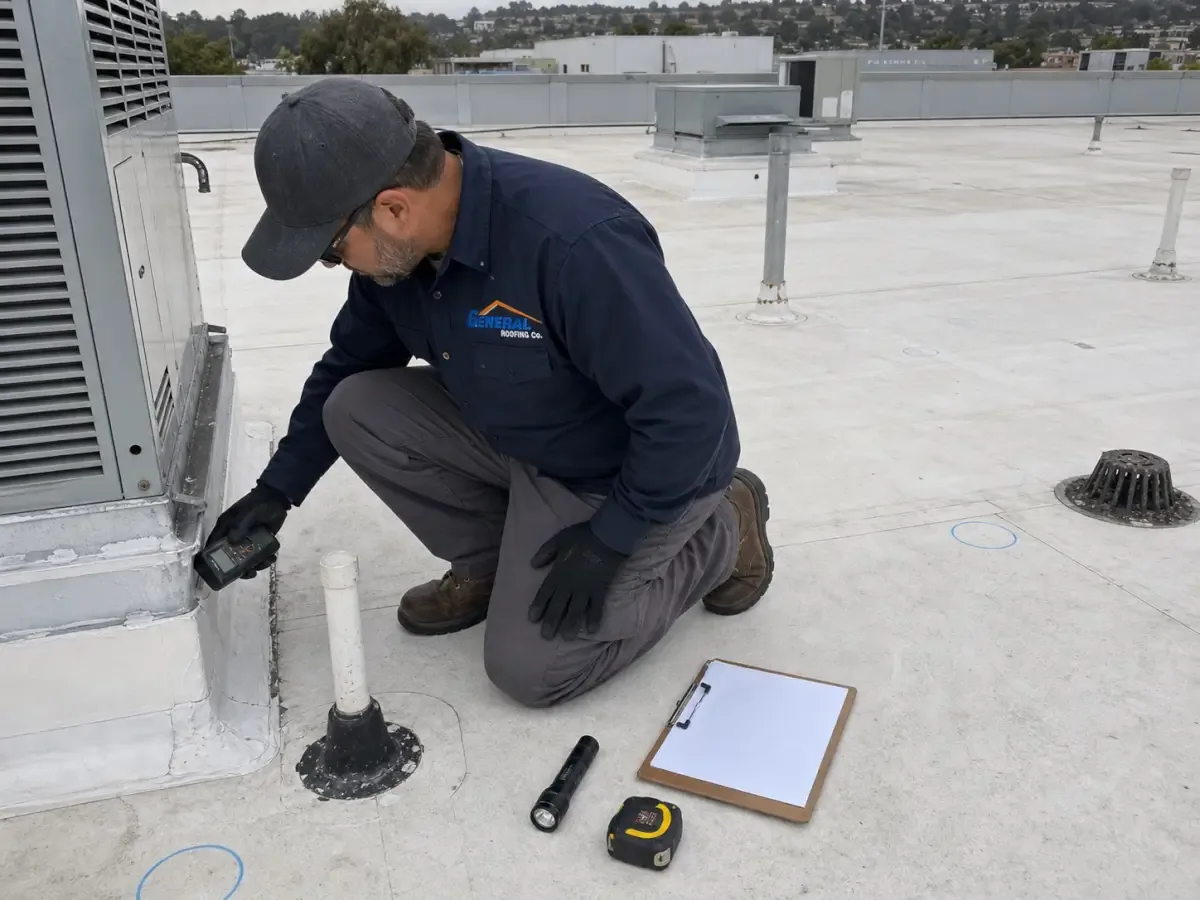
Send the property list, roof-area register, warranty certificates under either manufacturer name, and an access contact. We walk the roof, match its system to the file, and write a documented assessment that keeps current repairs apart from capital planning assumptions.
A name change and what it does to the file
Firestone Building Products now carries the Holcim Elevate name, and older paperwork still uses the former one. That matters at the desk, not on the roof: a warranty certificate, a closeout letter or a spec sheet may list either name, and a purchaser doing due diligence may see both in the same binder. We match the document to the roof by system, thickness and date, and flag any mismatch for the owner to clear with the manufacturer.
Keeping those papers aligned is the heart of roof warranty management. A roof that is physically sound but undocumented loses weight in a claim or sale, while a well-documented one lets the asset manager show condition and coverage in one sitting.
Reading a rubber or thermoplastic sheet in the field
EPDM and its thermoplastic cousins look similar from the parking lot and behave differently on the roof. A black cured-rubber sheet shrinks slightly with age and pulls at its corners and at the base of flashings. A white thermoplastic sheet may chalk, craze at welds or lose plasticizer on the surface over many seasons. We press along seams, lift flashing edges and look for pulled-away corners, then log each defect by area.
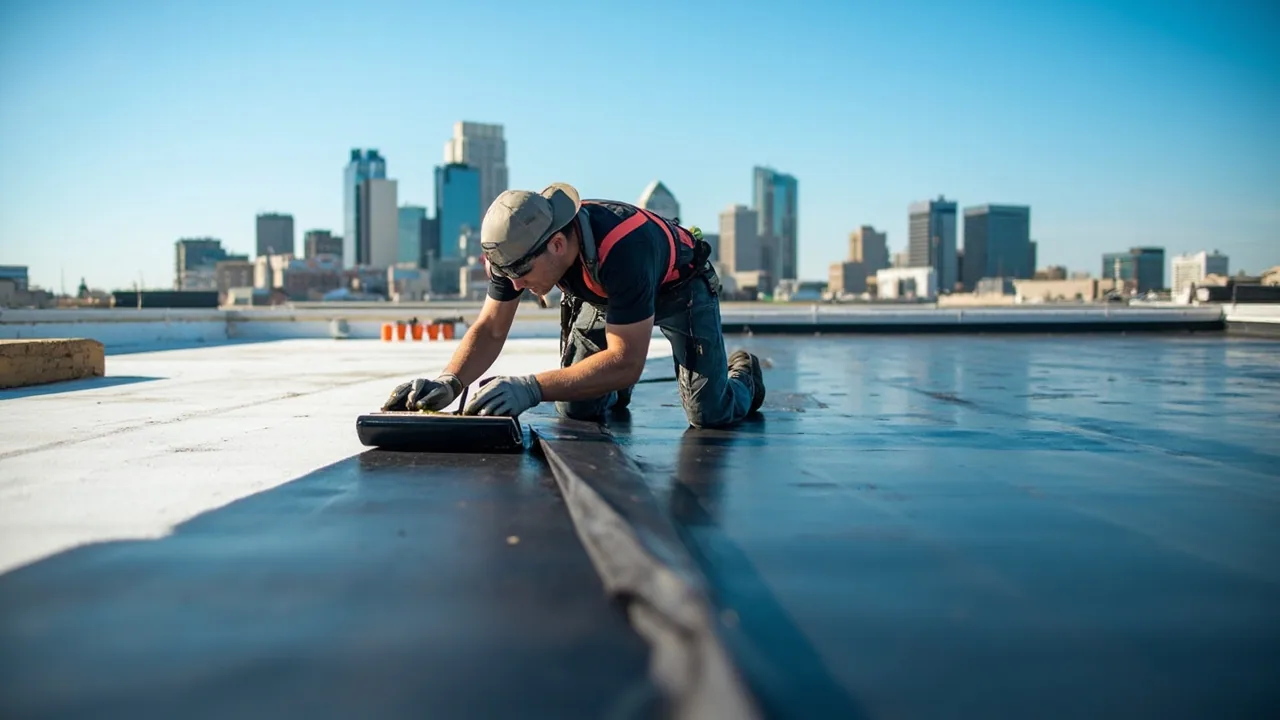
A shrinking EPDM sheet calls for different flashing work than a TPO sheet with a split weld, and the field findings tell us which repair applies. The same questions come up when the sheet is a Carlisle SynTec or Versico product, since rubber and thermoplastic behave alike across makers. What differs is the splice or weld method, the adhesive and the compatible patch, so we confirm those before any repair material is ordered. A cured-rubber splice needs a primed, dry surface and a patch lapped well beyond the damage; a weld needs a clean thermoplastic surface and a hot-air pass that is probed afterward.
Freeze-day exposure at seams, curbs and drains
With 37.54 inches of annual precipitation, water spends a great deal of time on Olathe roofs, and on cold days it spends that time as ice. Ice at a drain can back water up behind a curb. Ice at an edge can lift metal. Ice beneath a seam that was never fully bonded forces it open further each cycle. Those are the sites we inspect first after a thaw, working from drains outward.
A written roof condition report pairs each of those locations with photographs and a priority. The owner can then separate what needs attention before the next winter from what can wait for the capital year, and the report becomes the baseline for the following interval. Photographs taken from the same positions each visit make change easy to see, and a defect that has grown between visits moves up the repair list.
Perimeter metal and the 2024 wind path
Edge metal and wall flashing, whether from the manufacturer or a local fabricator, keep wind from getting under a membrane. On May 19, 2024, a squall line pushed straight-line winds from Gardner into Olathe at an estimated 80 mph, while short-lived tornadoes formed elsewhere in the county. For roofs in or near that path the review is simple and specific: lifted coping, bent drip edge, torn termination and any gap at a corner.
Where damage is found, the first move is to make the edge safe, and the permanent repair follows. A tornado damage or wind scope should be written separately from ordinary wear so any later review sees a clean division.
More About Holcim Elevate Roofing Systems in Olathe, KS
When a coating or recover fits
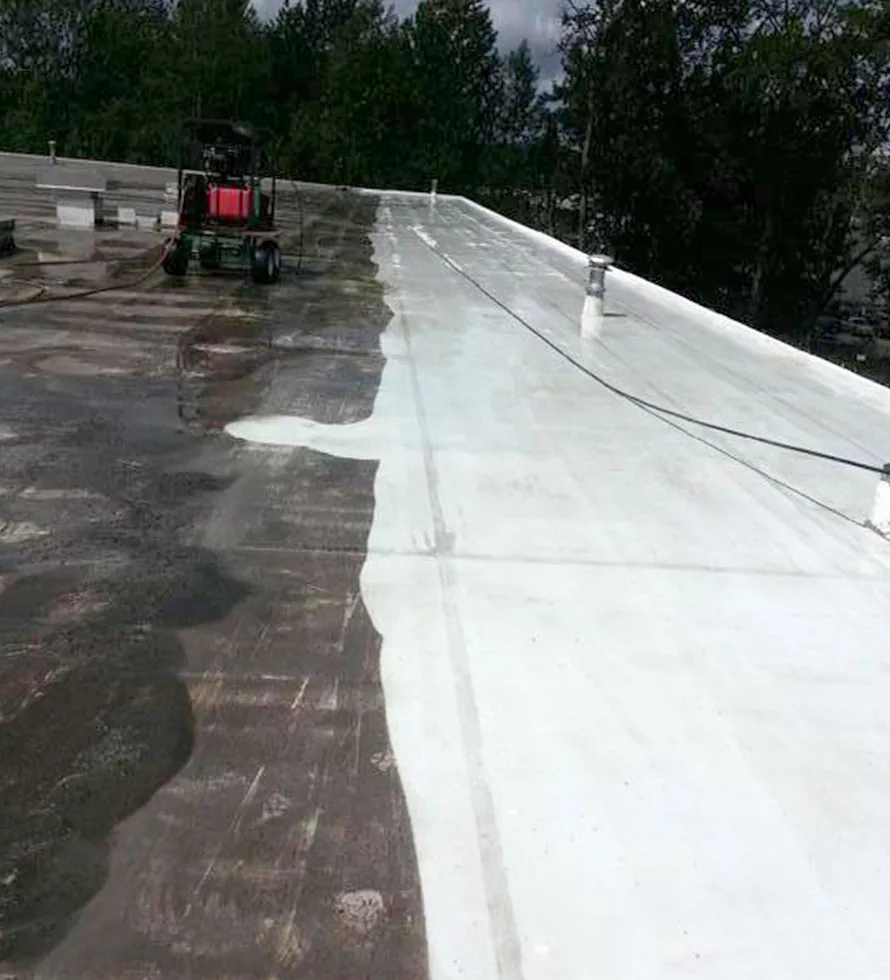
An aging but dry roof can sometimes be renewed without full tear-off. A cleaned and primed membrane may accept a compatible coating, and a sound insulation layer may support a new sheet over the old. Both depend on moisture mapping, seam adhesion tests and a look at the deck. If wet insulation is found, the recover or coating choice fails, and the conversation turns to replacement of the wet area or the whole roof.
Our roof coating restoration work begins with test patches and adhesion pulls, and a quote follows only when they pass. Owners weighing options should compare the remaining useful life, not just the first cost.
Placing a Holcim Elevate roof in the portfolio sequence
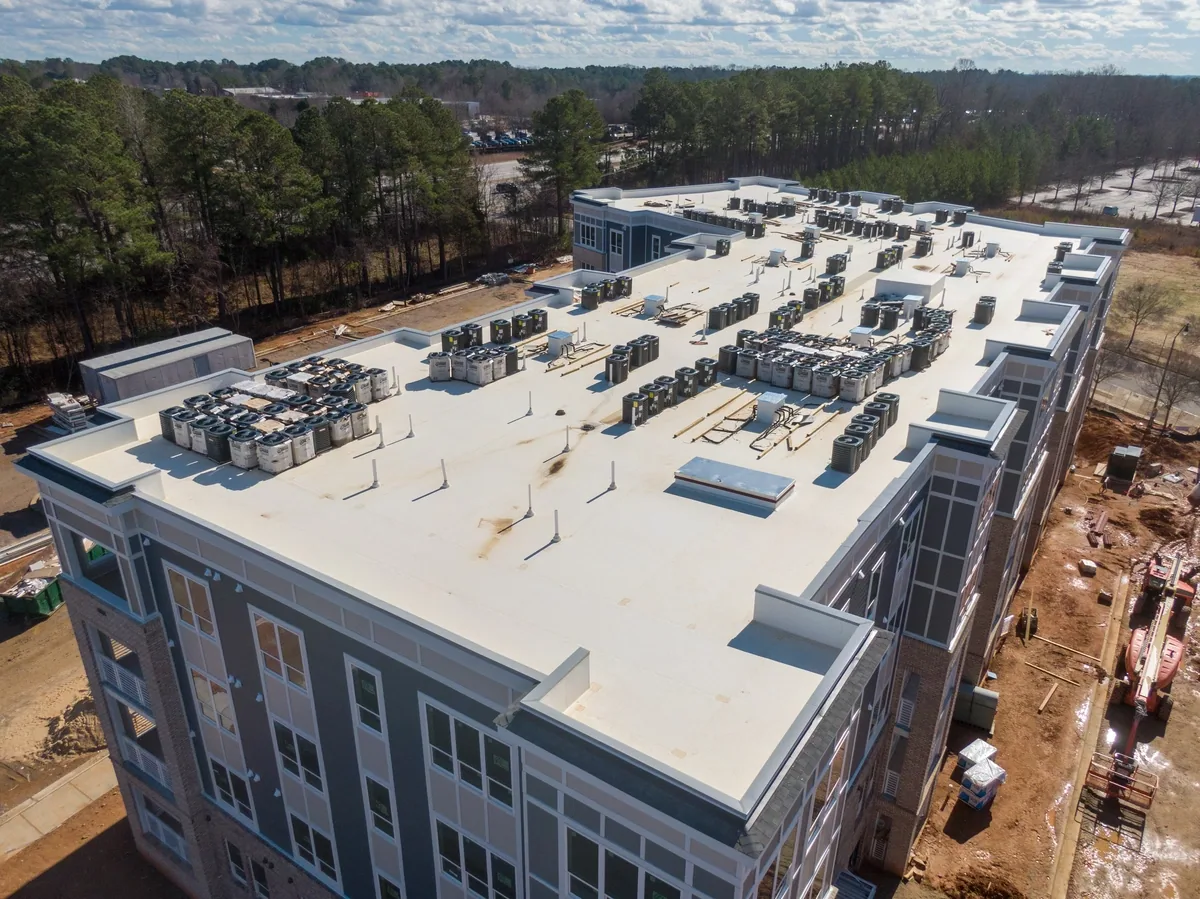
Every owner with more than one building needs a way to compare roofs on a common scale. On a schedule that includes buildings in Olathe, Lenexa and De Soto, the roof is one line among many. We give it a system label, an inspection interval, a documented condition and a renewal trigger, then rank it against the rest. The result supports reserve planning and gives the property team a plain list of what to do this year, what to watch, and what to budget for later. Buildings along K-10 and in Olathe can share that list.
Commercial Roofing Questions
Does the Firestone-to-Holcim name change affect an existing warranty?
The change affects the paperwork you hold and the entity you contact, so check the certificate and the original terms. We cannot speak for the manufacturer, but we can document the roof's system, thickness and condition so the file stands on its own. If a claim is ever needed, matching the roof's records to the warranty language is the first job.
What distinguishes a shrinking rubber sheet from a normal one?
Look at the corners and the base of walls and curbs. A sheet pulling away from flashing, bridging over a corner, or showing tight wrinkles is under tension. Normal sheet lies flat with relaxed edges. The tension points are where leaks begin, so we correct them before they open.
Should a roof be recoated or replaced when the insulation tests dry?
Dry insulation keeps both options open, so the choice turns on the membrane. If seams hold, adhesion tests pass and ponding is limited, a coating or recover can extend the interval at lower cost. If the sheet is brittle or heavily patched, replacement of the membrane over reusable board may make more sense. We lay out both with the test data.
What belongs in a reserve plan line for one roof area?
The system type, last inspection date, condition rating, recurring defects, drainage notes, estimated remaining interval and the trigger that would move it to replacement. A line that lacks any of these forces guesswork when the budget is set. We build the lines from the field visit so the numbers rest on the roof.
How does the 2018 code adoption shape a replacement?
The city's transition notice made the 2018 International code set for buildings, existing buildings and energy effective on September 1, 2019, and each project then confirms its edition and amendments. Insulation values and attachment design follow from that. We resolve it before the bid basis is fixed, so bidders price the same assembly.
Bring the paperwork and the roof together
Send the property list, roof-area register, warranty certificates under either manufacturer name, and an access contact. We walk the roof, match its system to the file, and write a documented assessment that keeps current repairs apart from capital planning assumptions.