Fire Damage Roof Repair in Olathe, KS
After a fire, the roof is the first part of the building to need a decision and the last part anyone wants to look at. Olathe, KS gets 37.54 inches of precipitation in an average year, so a roof opened by fire, or weakened by it, has to be closed against weather within hours, long before the insurance scope, the structural findings and the rebuild design are settled. We handle that sequence in order: make the roof safe to approach, dry it in, document the damage, and then build the permanent scope with the owner, the insurer and the code official at the table.
Send the loss date and the structural findings
Share the property address, the roof-area register, the insurer contact, any fire department or engineer reports, and an access contact. We will secure the roof, document what burned, and prepare a scope that separates the covered loss from planned capital work.
The first hours: safety, shoring and dry-in
Before anyone steps on a roof that has burned, a structural check decides whether it can carry a crew. Fire can char wood deck and framing, soften steel, spall concrete and leave the surface of a membrane intact above a hollow, burned-out insulation layer. We ask the fire department and the building owner what has been cleared, and we look from a safe position first: sagging, open penetrations, exposed deck and any area where the membrane lies unevenly over the structure.
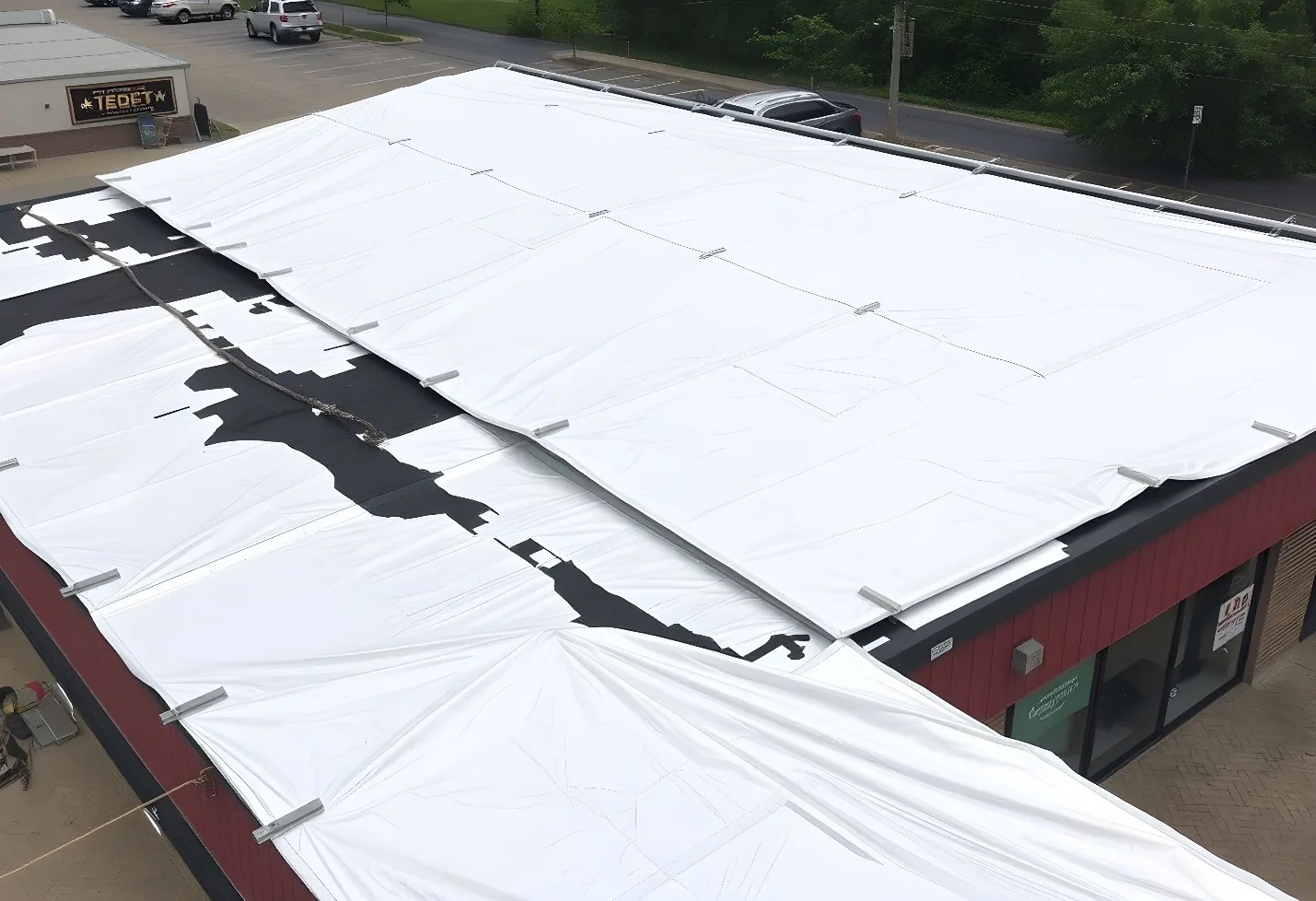
If the roof is stable enough, temporary protection follows: tarps, temporary membrane or sheet metal over openings, secured so wind does not lift them. For emergencies at night or over a weekend, emergency roof repair is available at any hour. If it is not safe to walk the roof, shoring or engineered supports come first and the dry-in follows from the edges. Water entering a fire-damaged building adds to the interior loss, so speed matters, but not at the cost of putting a crew on a deck that cannot hold them.
What fire and smoke do to roofing materials
Thermoplastic membranes such as TPO and PVC melt and shrink, and heat can distort even sections far from the flames. EPDM scorches and loses elasticity. Modified bitumen and built-up roofs carry bitumen that can burn, melt, or run into drains and seams. Insulation, especially foam plastic, can be consumed or collapse, and the cover board beneath a membrane can be charred without any visible mark above.
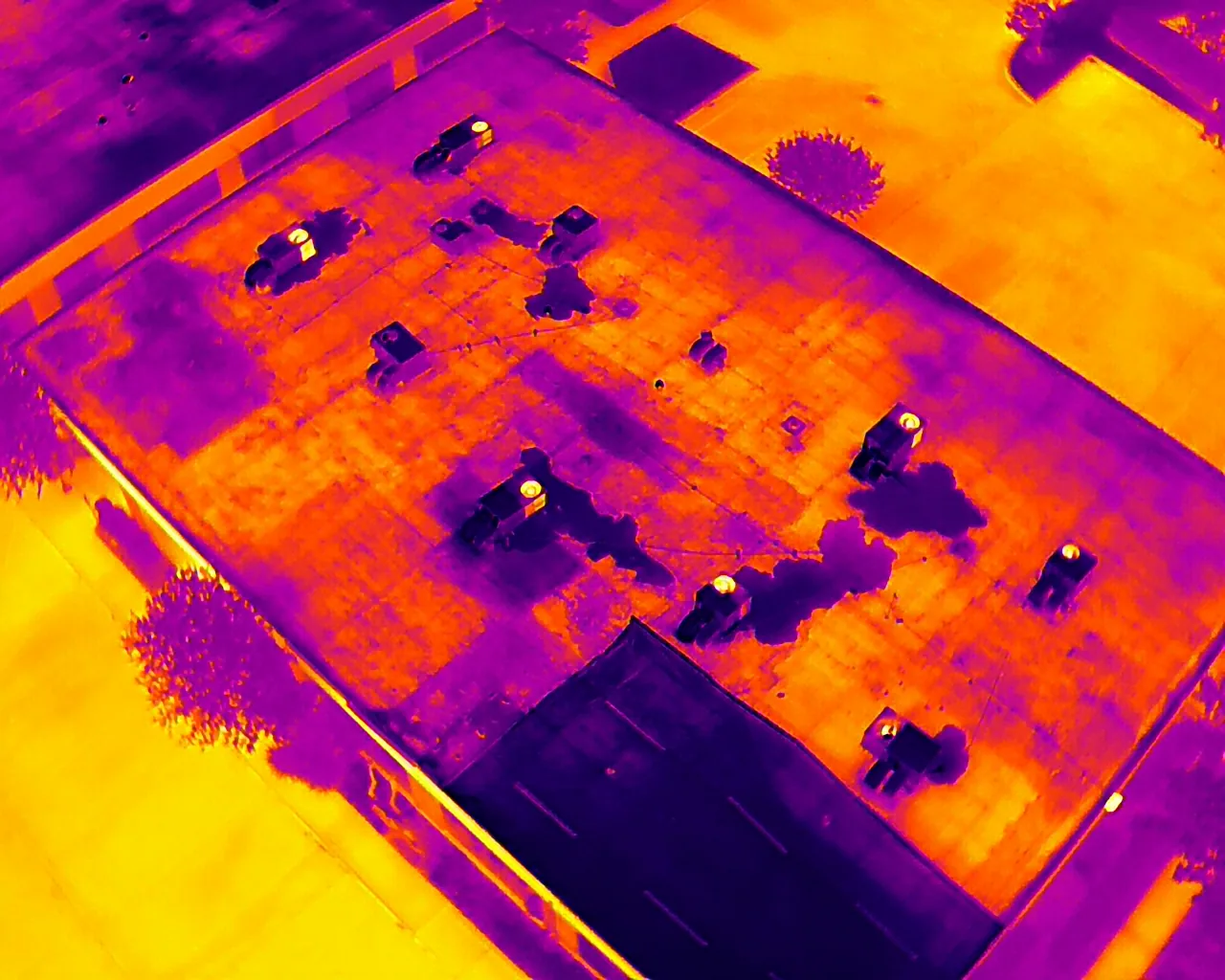
Smoke and soot add a quieter problem. Residue can contaminate a membrane surface in ways that affect adhesion for coatings and patches, and heat-driven moisture can condense inside the assembly. We sample and test suspect areas and cut inspection openings, because a thermal scan may show wet or damaged insulation that the surface hides. An infrared moisture survey after dry-in shows what has been affected, and we photograph the whole roof so the insurer and owner share the same record.
Code, permits and the adopted edition in Olathe
Olathe's notice on the move to the 2018 International code set for buildings, existing buildings and energy puts the change at September 1, 2019. Repairs after fire are one of the situations where existing-building provisions can apply, and the applicable edition, amendments and permit requirements should be confirmed with the city for each project. That check shapes decisions such as insulation thickness, fire classification of the new roof covering and whether damaged decking must be replaced to current requirements.
Property managers who work across Olathe and Lenexa should expect the permitting path to depend on the municipality, not on the owner, so we build the permit step into the schedule instead of treating it as a formality.
Repair the burned area or replace the roof
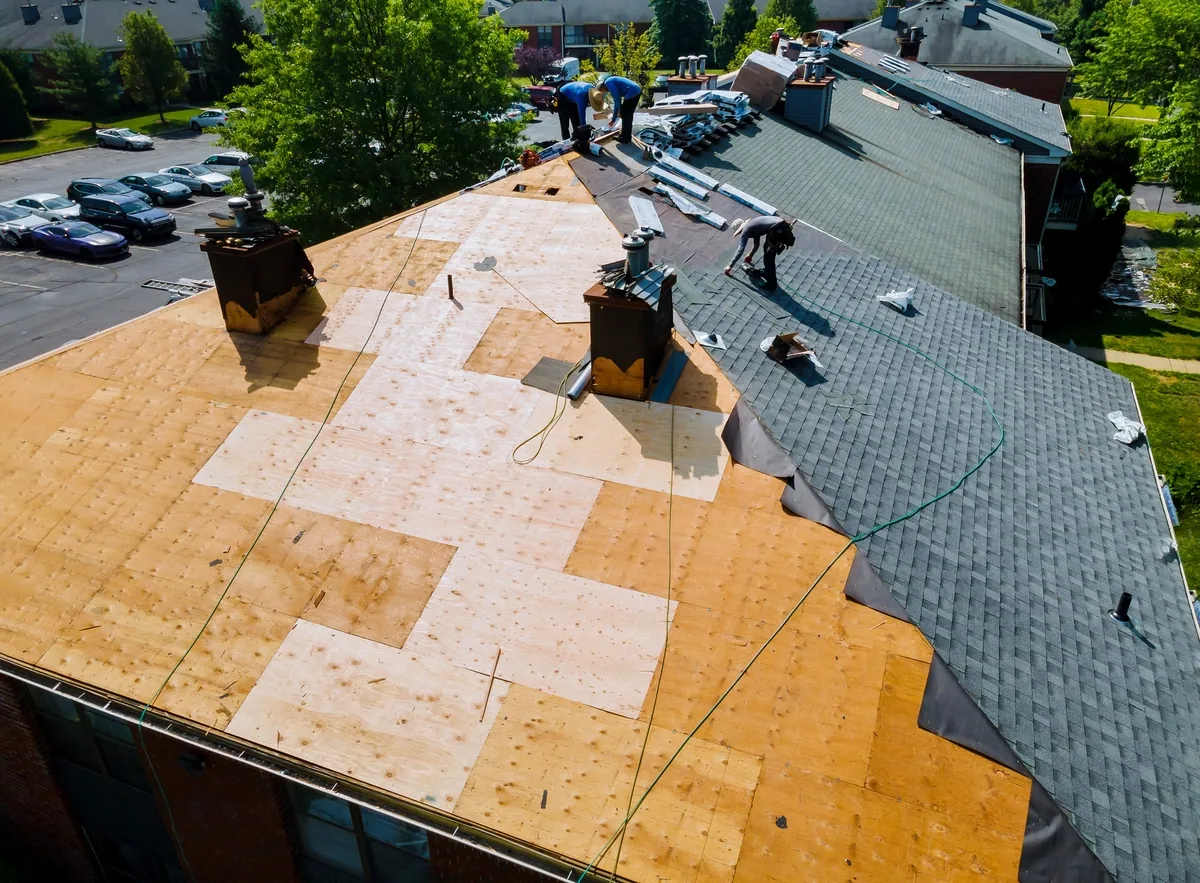
A fire that damaged a defined area with sound roofing around it may be repaired by removing the burned layers, restoring the deck, replacing insulation and tying a new membrane into the existing sheet. That approach is reasonable only when the surrounding roof is intact, tested and within its service life, and when new and old materials are compatible, with tie-in details that satisfy the manufacturer of the existing system.
When heat has affected a large share of the membrane, or the remaining roof is old enough that a patchwork would shorten its life, replacement of the whole roof system may be the more sensible scope. Insurers evaluate these cases on the policy terms and the loss documentation, so keeping measurements, samples and photographs organized is part of the repair work. We support the process with claim documentation that separates fire loss from prior wear, so the owner does not end up paying for old conditions or leaving covered damage unaddressed.
More About Fire Damage Roof Repair in Olathe, KS
Fire loss and the capital schedule
A fire changes a roof's replacement window whether or not it was planned. If a property had a reroof scheduled in two years and a fire accelerates it, the owner should compare the insurer's payment with the capital reserve and decide whether the new roof should be specified to a higher standard than the old one. A wind damage or hail damage claim on a roof sometimes presents the same choice, and the reasoning is the same: separate the loss from the prior condition.
The new roof is also a chance to correct drainage, add tapered insulation or move equipment curbs, changes that cost less while the deck is open. We give the owner a scope version for the covered repair and a second for improvements, so the decision between them is visible. The same approach holds in Olathe and neighboring municipalities such as Overland Park and Shawnee, with permit details adjusted to each city and a single scope format that lets an asset manager compare losses across the schedule.
Documentation from the first days deserves special care. Photographs taken before temporary protection goes on, dated moisture readings after dry-in, and notes on what the structural reviewer cleared all belong in the file. Insurers, code officials and the owner will each ask for a different piece of it, and a complete set assembled at the time is far easier to defend than one reconstructed weeks later.
Commercial Roofing Questions
How soon must a fire-damaged roof be covered?
As soon as it is safe to do so, because rain entering a damaged building adds interior loss and may affect an insurance claim. Temporary protection should be photographed and documented, and the building's policy may require reasonable steps to prevent further damage. The structural check comes first, then tarps or temporary membrane, then the permanent scope.
Can the existing roof be reused after smoke damage alone?
Often, if heat did not reach the membrane or insulation. Smoke and soot can usually be cleaned from a membrane surface, and testing shows whether adhesion for patches and coatings is affected. If the smoke came with heat, a scan and test cuts show whether insulation or the deck has been compromised. The test results decide the scope.
Who inspects the structure before roof work begins?
A licensed structural engineer, when the damage affects the deck, framing or supports. Fire officials and the city may also have requirements before work can start. We do not substitute for that engineering judgment, and we coordinate the roof work with whatever shoring or repairs they specify.
Will the insurer pay for upgrades to the new roof?
That depends on the policy language, including any ordinance or law coverage and the way the claim is adjusted. A separate scope for improvements lets the owner see what is covered and what is voluntary. We document code-driven requirements so they can be presented as part of the loss where the policy allows.
What happens to tenants during roof repair after a fire?
Occupancy after a fire is governed by the building's condition and the authority having jurisdiction. Where tenants remain or return, we plan around their access, loading and noise limits, and we protect interior spaces below the work. The property manager sets the schedule with each tenant contact.
Send the loss date and the structural findings
Share the property address, the roof-area register, the insurer contact, any fire department or engineer reports, and an access contact. We will secure the roof, document what burned, and prepare a scope that separates the covered loss from planned capital work.