Commercial Roofing in Grandview, MO
A metal roof that has outlived its fasteners and sealant is a replacement-window question that many owners put off because the panels still look sound from the parking lot. Grandview, MO counted 26,209 residents in the 2020 Census, reported about $330 million in 2022 retail sales and about $68 million in transportation-and-warehousing receipts, with retail well ahead of warehousing. We take on repair, replacement, recovery, coating and inspection of low-slope and metal roofs, and for Grandview owners of metal and membrane roofs we begin by finding out what the fasteners, seams and sealants are doing.
Start with a fastener and seam audit
Send the property list, roof plans, leak history and the date a decision is due. We will return a documented assessment that separates current repairs from capital planning assumptions.
Fasteners, seams and sealant in metal panels
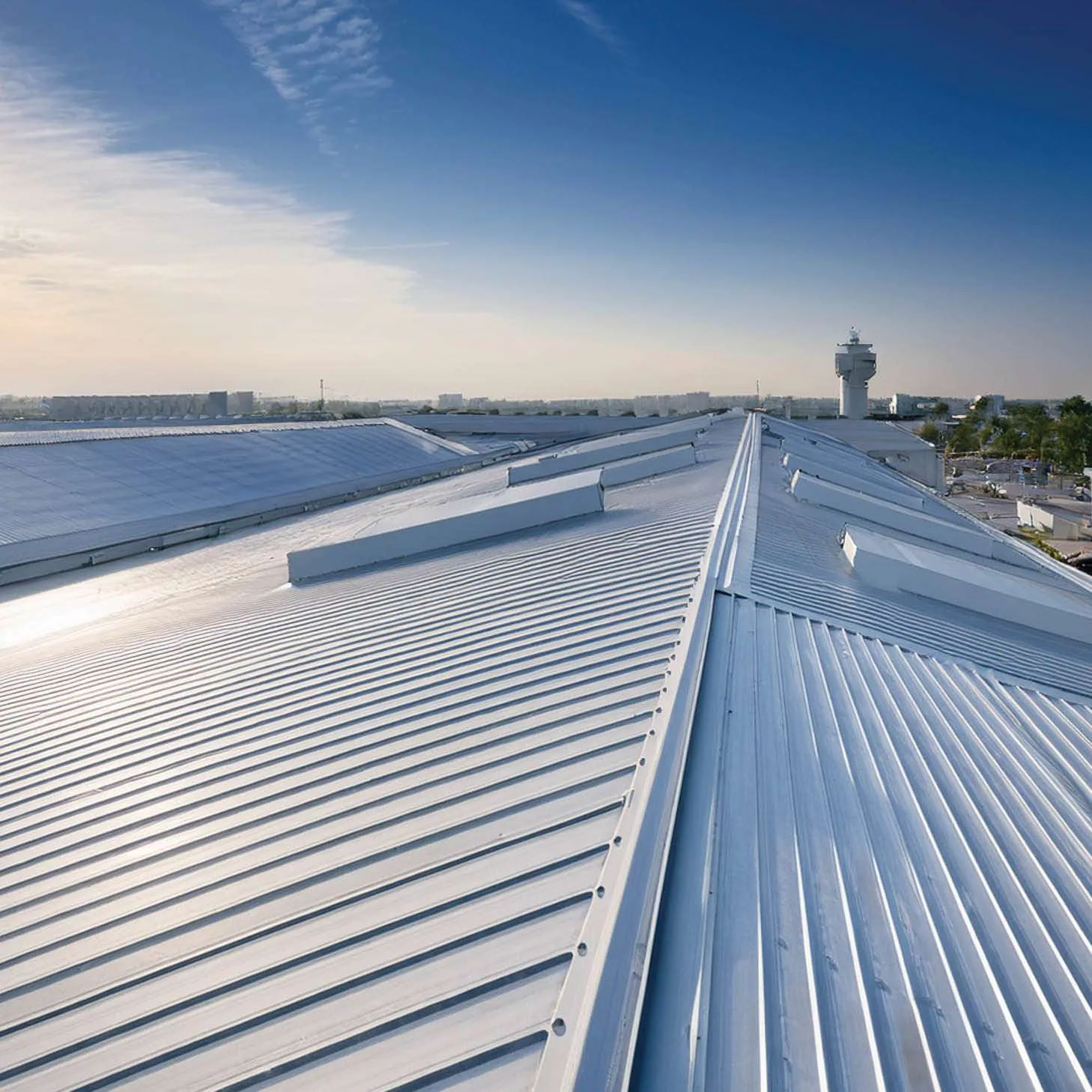
A metal roof fails slowly at its small parts. Exposed fasteners back out as panels move through temperature swings, their rubber washers harden and crack, and water follows the screw into the purlin. Lap sealant dries out. Panel seams on standing seam systems can lose their crimp, and clips can shift. None of this shows from the ground.
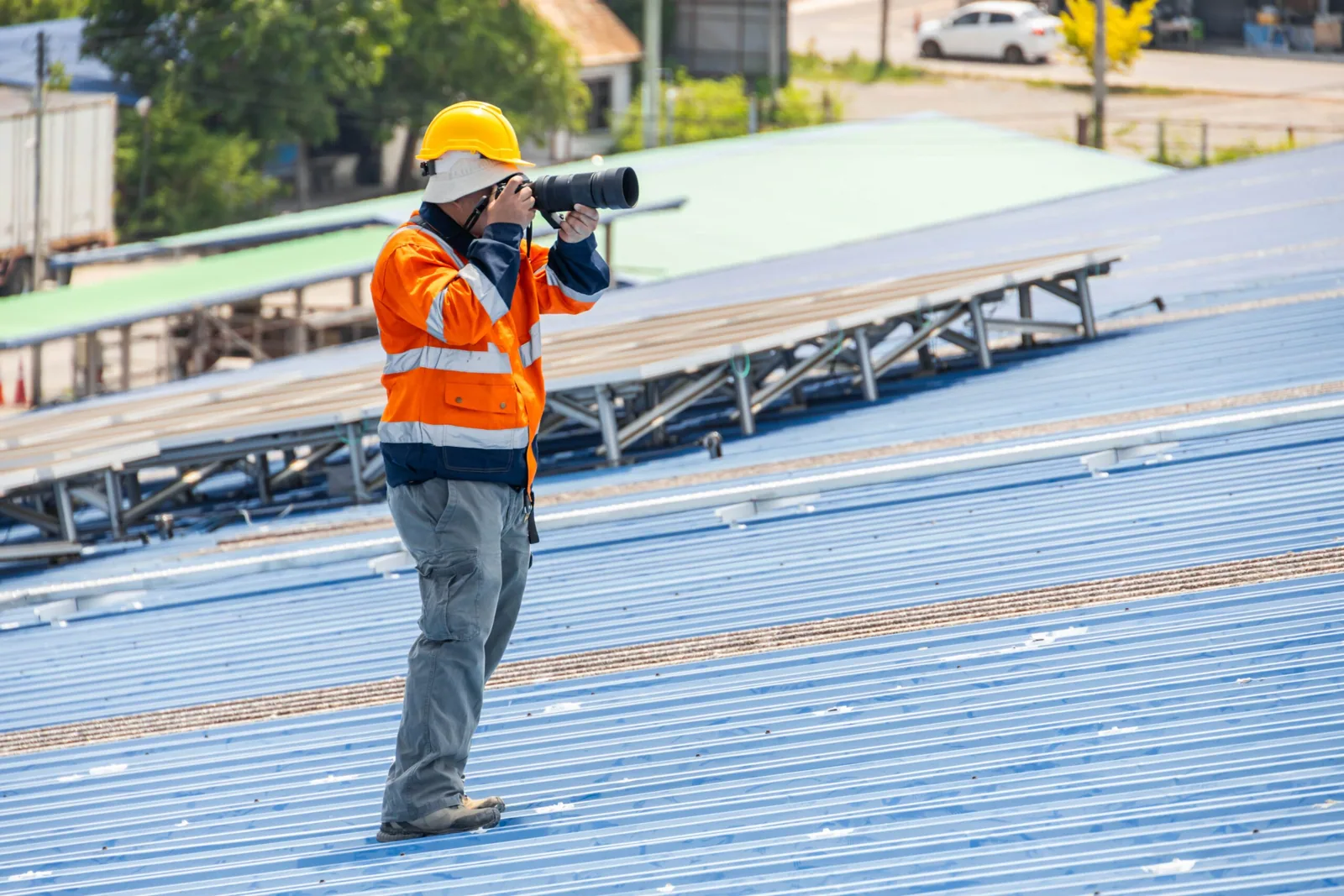
We walk the roof panel by panel, checking fasteners, laps, trim, penetrations and rust at cut edges and in valleys. Findings are marked on the plan, and where a pattern shows, such as an entire slope with failing washers, we price the correction as a unit. A commercial roof inspection of a metal roof is largely a fastener and sealant audit, and it often reveals that re-screwing and resealing can restore years of service.
Skylights and roof hatches on metal buildings deserve their own look. Their curbs are cut into the panel profile, and the closures that fill the gaps shrink or fall out. A missing foam closure strip is a small item that lets wind-driven rain reach the interior, and we list each one found.
Retrofit, repair or tear-off
The options for an aging metal roof run from resealing and re-fastening, through a coating, to a retrofit that installs new framing and panels over the existing roof, to full removal. A metal roof retrofit keeps the building in service and avoids disposal cost, and it adds a second layer of protection. It requires the existing structure to carry the load and the roof to be dry underneath.
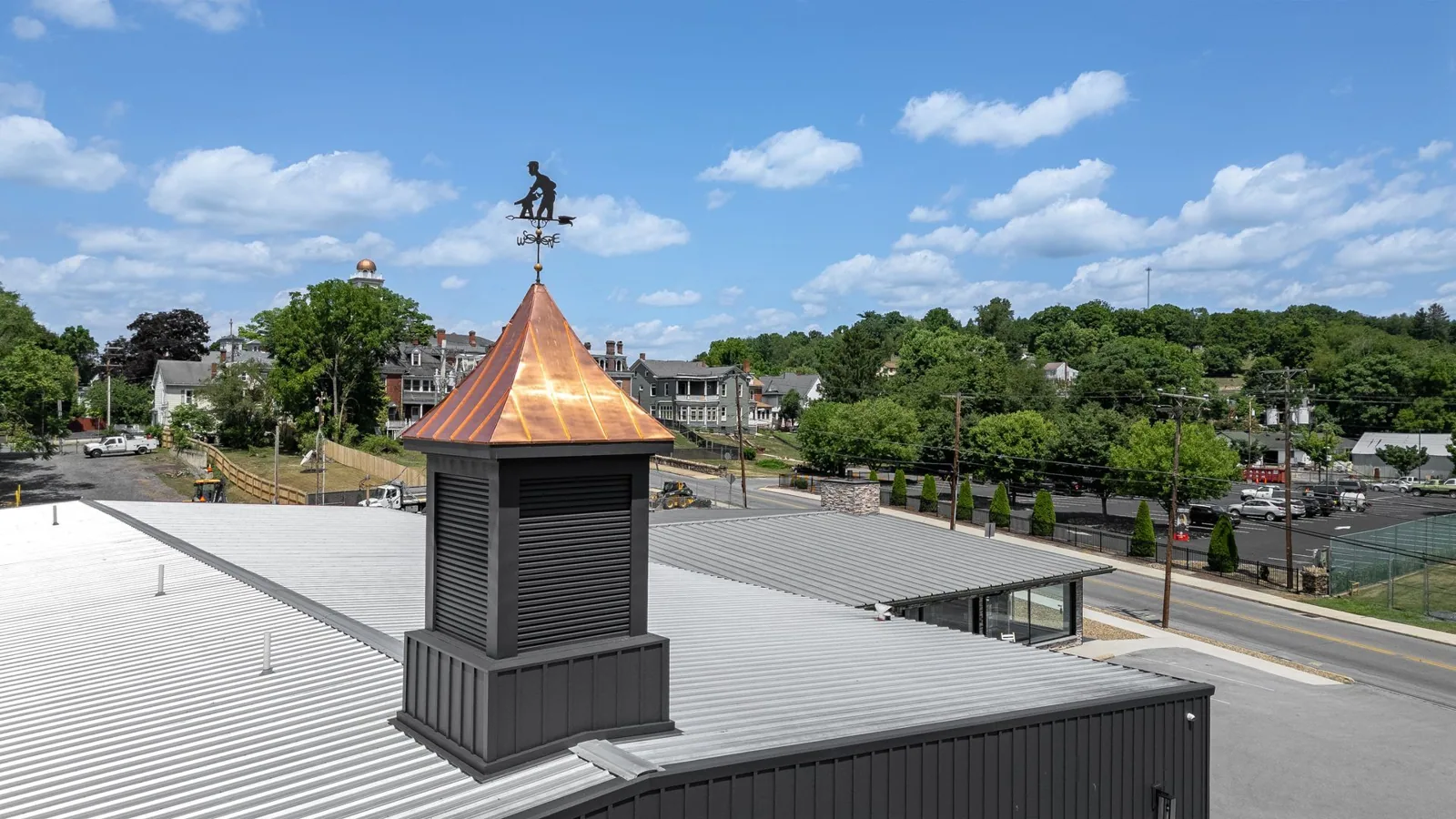
Where the existing metal is heavily corroded or the structure shows distress, tear-off is the safe path. The choice between a new standing seam metal roof and a membrane system follows slope, appearance, budget and the building's use. We lay out the tradeoffs with the field evidence so that the decision does not rest on a sales pitch.
Insulation under a metal roof is a hidden variable. Faced batts can hold moisture against the underside of panels and drive corrosion, so a retrofit scope includes a plan for the insulation and vapor control. We examine what is present, from below where possible, before setting the price.
Wind loads and the 2024 metro storm line
Surveyors for the National Weather Service put the peak wind of the May 19, 2024 squall line near 80 mph along a path from Gardner into Olathe, with short-lived tornadoes elsewhere in Johnson County. For Grandview owners it is a dated regional event and a reason to review attachment and edge details on metal and membrane roofs.
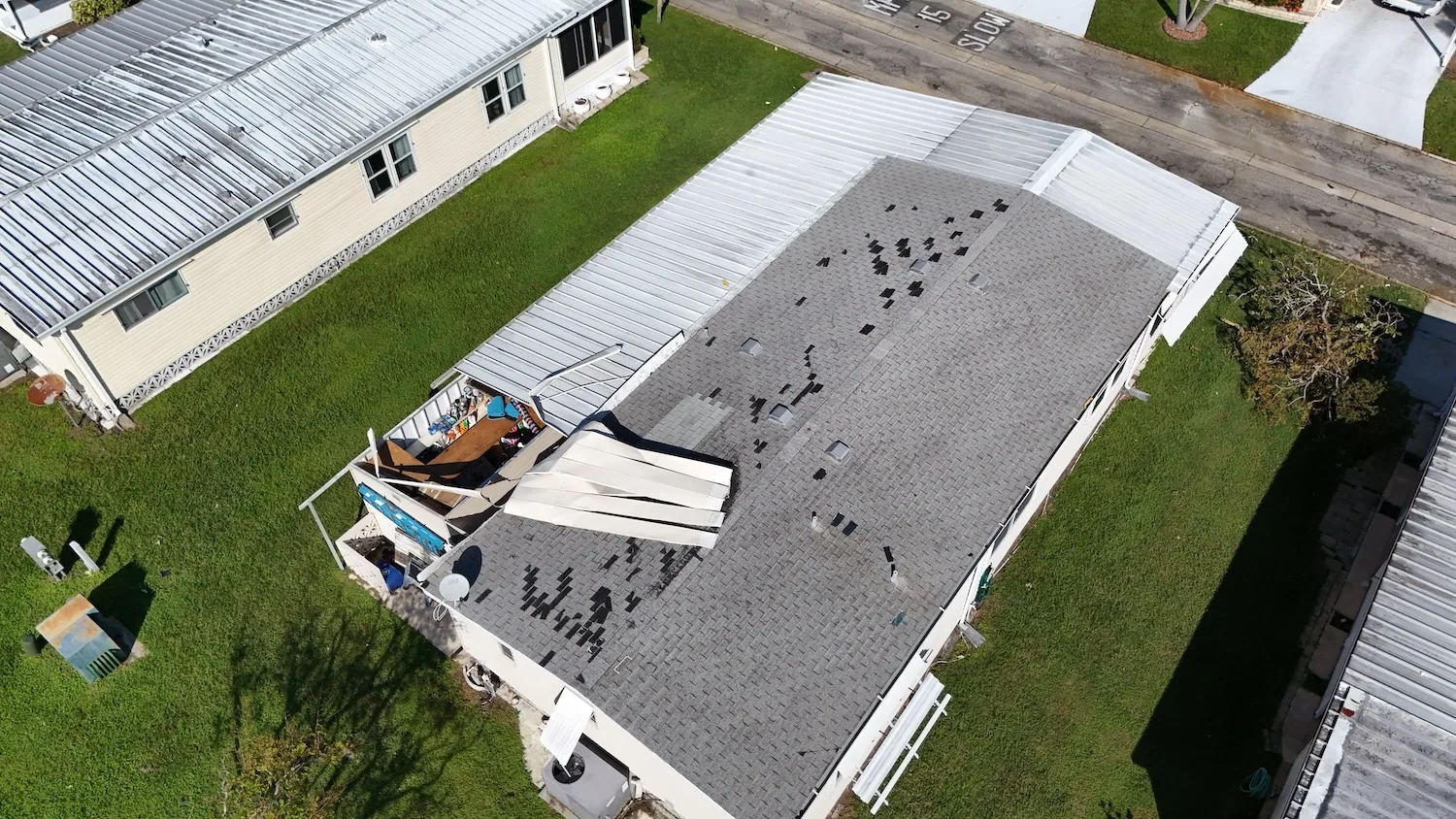
On metal roofs, wind finds loose ridge caps, rake trim and panel ends first. On membrane roofs, it finds perimeter terminations. Our wind damage roof repair work starts at those edges, and any needed fixes are made before the next storm season arrives.
Work windows for mixed-use buildings
Grandview reports both retail and transportation-and-warehousing receipts, and a roof plan must suit the building under it. A retail unit needs quiet hours and clean entrances. A light-industrial or flex unit needs dry-in speed and attention to overhead door traffic. We write the schedule around those needs, put staging where it blocks nothing important and keep material off roads used by trucks.
Metal work has its own limits: panels expand in the sun, and installation on cold or wet days needs extra care with sealants. A schedule that respects those limits finishes with fewer callbacks. Where a building has both metal and membrane areas, we sequence the work so one trade does not delay the other.
Delivery and crane access need thought on any replacement. Panels are long, and a site with tight truck turns or overhead lines requires a lift plan. We confirm the route and staging area at the first walk, since a bad site layout adds time and cost that nobody saw in the bid.
More About Commercial Roofing in Grandview, MO
Property types that share a roof program
An owner can hold flex buildings, shopping strips and small warehouses in one portfolio. Our flex industrial roofing work and our retail scopes use the same condition scale, which lets a manager compare roofs of different types and rank spending by risk. A cracked skylight curb on a retail strip may rank above a sound warehouse roof of the same age.
That comparison feeds the reserve plan. It also highlights buildings where a single decision, such as a recover or a coating, could serve several roofs at once and save mobilization cost.
Sending the property file
Provide roof plans, panel types if known, fastener or sealant history, leak locations and the decision date for each roof. Owners with properties in Raytown or Kansas City, Missouri can add them to the same file, and we will keep the format identical across all sites.
If a warranty is still active on the paint finish or on the weathertightness of the roof, send it. Fastener replacement and sealant choices can affect coverage, and we match materials to the terms when we can.
Commercial Roofing Questions
How can an owner tell whether a metal roof needs re-fastening or replacement?
Look at the fasteners first. If most are backing out, but the panels are flat, the coating is sound and rust is limited, re-fastening and resealing can extend life. If panels are heavily rusted, deformed or leaking at laps across wide areas, replacement or retrofit is more realistic. A panel-by-panel survey gives the evidence for either choice.
Is a retrofit cheaper than tear-off?
It usually saves removal, disposal and exposure time, but it adds new framing or purlins and requires structural capacity. The final price depends on the existing condition and the building. We compare the two with quantities from the survey, so the owner sees the real difference rather than a general rule.
What should be repaired after a windstorm on a metal roof?
Check ridge caps, rake and eave trim, panel ends, loose or missing fasteners and any displaced flashing, then look for dented or shifted panels. These are the first things the wind lifts. Temporary fixes keep water out, and permanent repairs follow once the damage is documented and any claim steps are complete.
Do coatings work on old metal roofs?
They can, when the metal is sound, the surface is clean and rust is treated first. A coating seals seams and fasteners and reflects heat, but it does not repair structural damage or cure a failed lap. We test adhesion on a small area before recommending it for the whole roof.
How long can a metal roof stay open for retrofit work?
Retrofit panels go over the existing roof, so the building stays covered throughout. Where old panels are removed, the roof is opened in small bays and closed the same day with new panels or temporary protection. That approach limits exposure for stock and equipment below and keeps the building usable during the job.
Start with a fastener and seam audit
Send the property list, roof plans, leak history and the date a decision is due. We will return a documented assessment that separates current repairs from capital planning assumptions.